
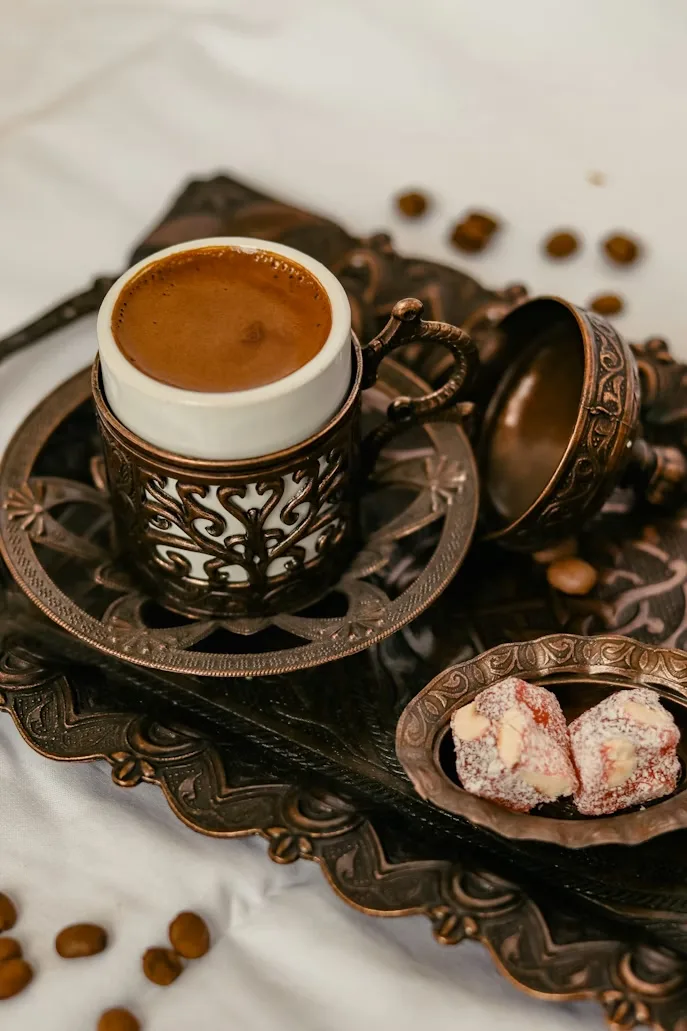
Armenian coffee, called soorj in Armenian, is a small, strong, unfiltered coffee made from powder-fine grounds and cold water in a jazzve, a little long-handled pot, and heated slowly until a fine foam rises. Many families add cardamom. It is brewed with the same grind and the same method as the coffee sold in the US as Turkish coffee; at an Armenian table it is simply soorj.
This guide covers what soorj is, the pot it is made in, how to make it at home, the cardamom question, the old custom of reading the cup, and which coffee to buy for it.
If you take your soorj with cardamom, Lezzet Cardamom is the same two-roast coffee with organic cardamom ground in.
What Is Soorj?
Soorj (սուրճ, said close to "soorzh") is the Armenian word for coffee, and in an Armenian home it means one particular cup. The coffee is ground as fine as flour, stirred into cold water with sugar if you take it, and brought up slowly in a jazzve until the foam rises. It is poured with its grounds into small cups and sipped slowly, and the grounds settle to the bottom.
Soorj is the coffee of hospitality. It is what a guest is offered on arrival, and accepting a cup is a small way of accepting the welcome. For many Armenian families, inside Armenia and far beyond it, soorj is tied to family gatherings and to the grandmother who made it, as much as it is a drink.
Is Armenian Coffee the Same as Turkish Coffee?
The method is the same. Armenian coffee and the coffee sold as Turkish coffee share the powder-fine grind, the small long-handled pot, the slow heat, the foam and the grounds left in the cup. The same is true of Greek coffee, Bosnian coffee and the Levantine cup known as Arabic coffee. Each place kept the method and gave it its own name and its own pot, a story we follow in our guide to Turkish, Greek and Arabic coffee history.
The name matters, though. Armenians call it Armenian coffee, or simply soorj, and that is the name to use at an Armenian table. In practice the differences are in the details each family keeps: how much sugar, how much foam, and above all whether there is cardamom in the pot.
What Is a Jazzve?
A jazzve (also spelled jazve or jezve) is the pot that makes Armenian coffee. In Armenian it is also called a srjep. It is small and wide at the base, narrow at the neck, with a flared lip and a long handle, traditionally made of copper or brass.
The shape does the work. The wide base heats the coffee evenly, the narrow neck squeezes the rising foam into a thick layer, the flared lip gives a clean pour, and the long handle keeps your hand away from the flame. It is the same pot the Turks call a cezve and the Greeks call a briki.
Buy one sized for how many cups you make. A 12 oz pot makes two to three small cups. Our guide to the best Turkish coffee pot compares copper and stainless steel, and everything in it applies to a jazzve.
How Do You Make Armenian Coffee?
Soorj takes a few minutes and your full attention. Make it the way you plan to drink it, because the sugar and the cardamom go in at the start.
Measure. For each cup, pour one demitasse of cold water (60 to 70 ml) into the jazzve and add about 7 g of powder-fine coffee, one heaping teaspoon.
Spice and sweeten. Add a pinch of ground cardamom or one crushed pod per cup if you take it, unless your coffee already has cardamom ground in. Add sugar now if you want it.
Stir once. Stir until the powder is wet through and the sugar dissolves, then leave the spoon out.
Low heat. Set the jazzve on the lowest heat. In a few minutes a fine foam gathers at the edges and starts to climb the neck.
Lift it off. When the foam rises toward the rim, lift the jazzve off the heat. Stay with the pot: this moment decides the cup.
Pour and wait. Share the foam between the cups first, then pour the rest slowly. Give it a minute for the grounds to settle, and stop sipping when you reach them.

If the foam comes out thin, the heat was too high or the coffee was stale. Our step-by-step brewing guide covers the fixes, and each one applies to soorj.
Do Armenians Add Cardamom to Coffee?
Many do, and it is one of the things people most associate with Armenian coffee. There is no single rule. Some families crush a cardamom pod into the jazzve while the coffee brews. Others drop a pod or a few seeds into each empty cup and pour the coffee over it. Plenty of households leave it out entirely and drink their soorj plain.
The cardamom changes the cup in a way that is easy to taste: a bright, citrusy perfume that sits on top of the coffee and makes the cup seem a little sweeter. If your family took it with cardamom, a coffee with the spice already ground in saves a step and spreads it evenly through the pot.
What Is Armenian Coffee Reading?
When the cup is finished, the grounds are not always thrown away. In many Armenian homes the drinker turns the cup over, away from the body, onto its saucer, and leaves it a few minutes to cool and dry. The grounds slide down the sides and leave patterns, and someone at the table, traditionally a grandmother or an older woman of the family, reads them.
It is half fortune, half conversation: a reason to stay at the table a little longer. If you want to try it, our coffee cup reading guide walks through the zones of the cup and the common shapes. The grounds have to be powder-fine to leave a clear pattern, which is one more reason the grind matters.
How Did Armenian Coffee Travel?
Armenians have been part of coffee's story for a long time, well beyond their own kitchens. In 1672 an Armenian merchant named Harutyun, known in Paris as Pascal, sold coffee at the Saint-Germain fair and opened one of the city's first coffeehouses. In 1685 another Armenian, Hovhannes Astvatsatur, known in Vienna as Johannes Diodato, opened Vienna's first coffeehouse.
Today soorj is brewed wherever Armenian families live. In the United States, Armenian-American families have kept the jazzve on the stove for generations, and family-run Armenian roasters, some now in their third generation, still grind coffee powder-fine for it.
What Is the Best Coffee for Armenian Coffee?
Three things decide the cup in a jazzve:
A powder-fine grind. Nothing filters soorj, so the grind has to be finer than espresso. Coarser coffee gives a thin, gritty cup and very little foam.
Freshness. Powder is as ground as coffee gets, and ground coffee loses its aroma quickly. Fresh coffee gives the thickest foam.
The bean. Specialty-grade arabica gives a sweeter, cleaner cup, and in an unfiltered coffee every bean shows.
Lezzet Traditional works in a jazzve as it is. It starts with two specialty-grade arabicas, and a licensed Q Grader scored the coffee 84. The rich one is low in acidity, with notes of dark chocolate and nut, and we roast it dark for depth. The bright one we roast lighter to keep its lift. Each is roasted on its own, then blended, fresh-roasted in the USA in small batches and ground powder-fine.
For soorj with cardamom, Lezzet Cardamom is the same blend with organic cardamom ground in, so the spice is in every spoonful. And if you do not own a jazzve yet, the Turkish Coffee Kit pairs a 12 oz pot with all three flavors: Traditional, Cardamom and Cinnamon.
Armenian Coffee FAQ
What is Armenian coffee?
Armenian coffee, soorj in Armenian, is a small, strong, unfiltered coffee made from powder-fine grounds, cold water and sugar to taste in a jazzve, a little long-handled pot. Many families add cardamom. It is served in small cups, often to guests, and the grounds left in the cup are sometimes read for fortunes.
What does soorj mean?
Soorj (սուրճ) is the Armenian word for coffee. It is said close to "soorzh".
What pot is used for Armenian coffee?
A jazzve, also spelled jazve or jezve, and called a srjep in Armenian. It is small, wide at the base and narrow at the neck, with a long handle, and traditionally made of copper or brass.
Do Armenians put cardamom in their coffee?
Many do, though not all. Some families crush a cardamom pod into the jazzve as the coffee brews; others drop a pod or a few seeds into each cup before pouring.
What is the grind for Armenian coffee?
Powder-fine, finer than espresso, close to the texture of flour. Nothing filters the coffee, so a coarser grind gives a thin, gritty cup.
Can I use Turkish coffee to make Armenian coffee?
Yes. Coffee sold as Turkish coffee is ground to the same powder and brewed the same way, so it goes straight into a jazzve. Add cardamom if your family takes it, or choose a coffee with cardamom ground in.