What You Need: A Small Pot, Powder-Fine Coffee, Cold Water
A small pot. A cezve (also called an ibrik) is the traditional choice: a wide base to gather heat and a narrow neck that pushes the foam up. Our Turkish coffee pot guide covers copper versus stainless and what size to buy. No cezve? The smallest saucepan you own works; more on that below.
Powder-fine coffee. Finer than espresso, closer to flour: pinch it and it feels soft, with no grit. Most home grinders stop short of that, so Turkish coffee is usually bought pre-ground. Lezzet is two specialty-grade origins, one roasted dark and one lighter, fresh-roasted in the USA and ground powder-fine for the cezve.
Cold water and a small cup. A Turkish coffee cup (fincan) holds about 60–70 ml. An espresso cup is the same size and does the job.
The Recipe in 8 Steps
1. Measure the coffee. Spoon 7 g (one heaping teaspoon) of powder-fine coffee per cup into the cezve. For two cups, 14 g.
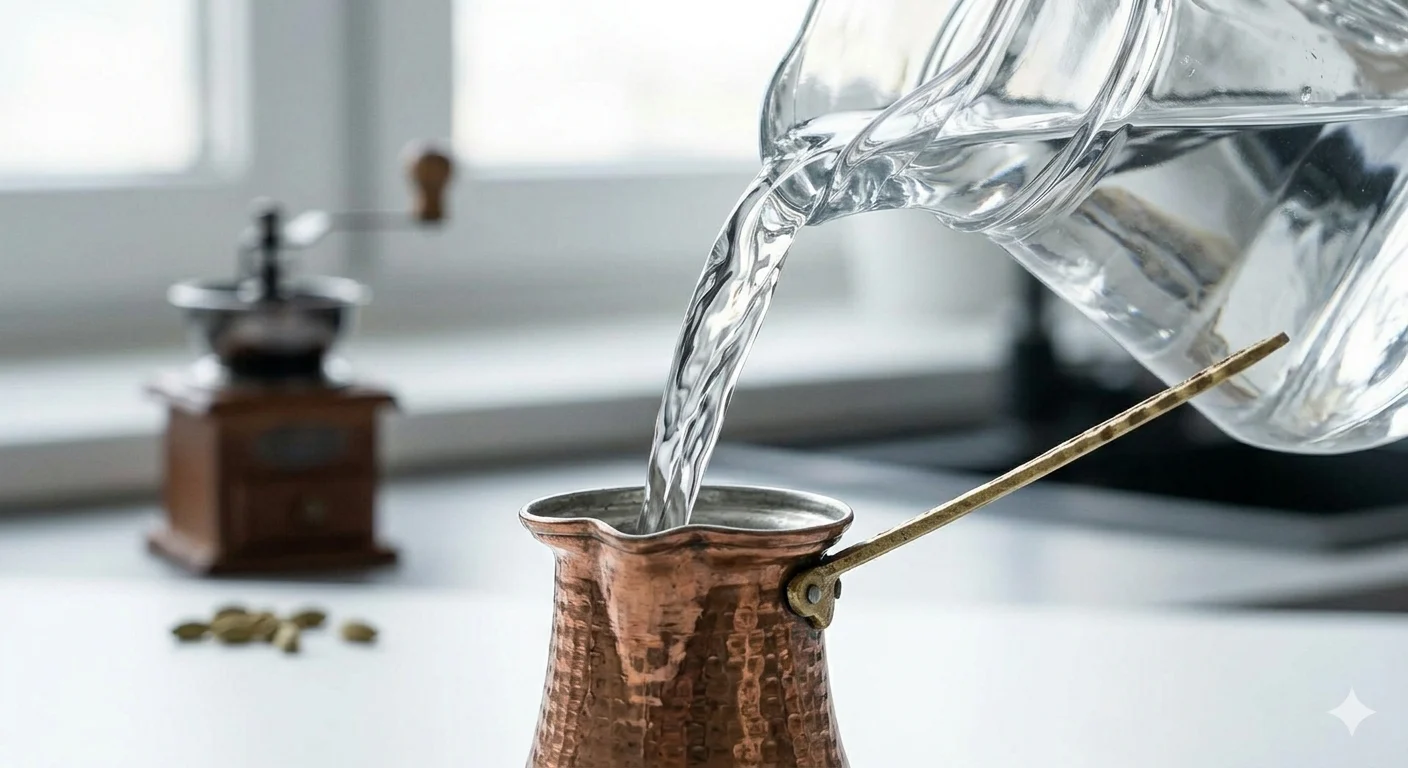
2. Add cold water. Pour in 60–70 ml per cup. The easiest measure is the cup you'll drink from. Cold water gives the coffee time to steep as the pot slowly warms.
3. Add sugar now, if you take it. Sugar dissolves in the pot and becomes part of the foam. It's never stirred in afterward.
4. Stir once. Enough to wet every bit of coffee, so nothing floats dry on top. From here on, leave it be.
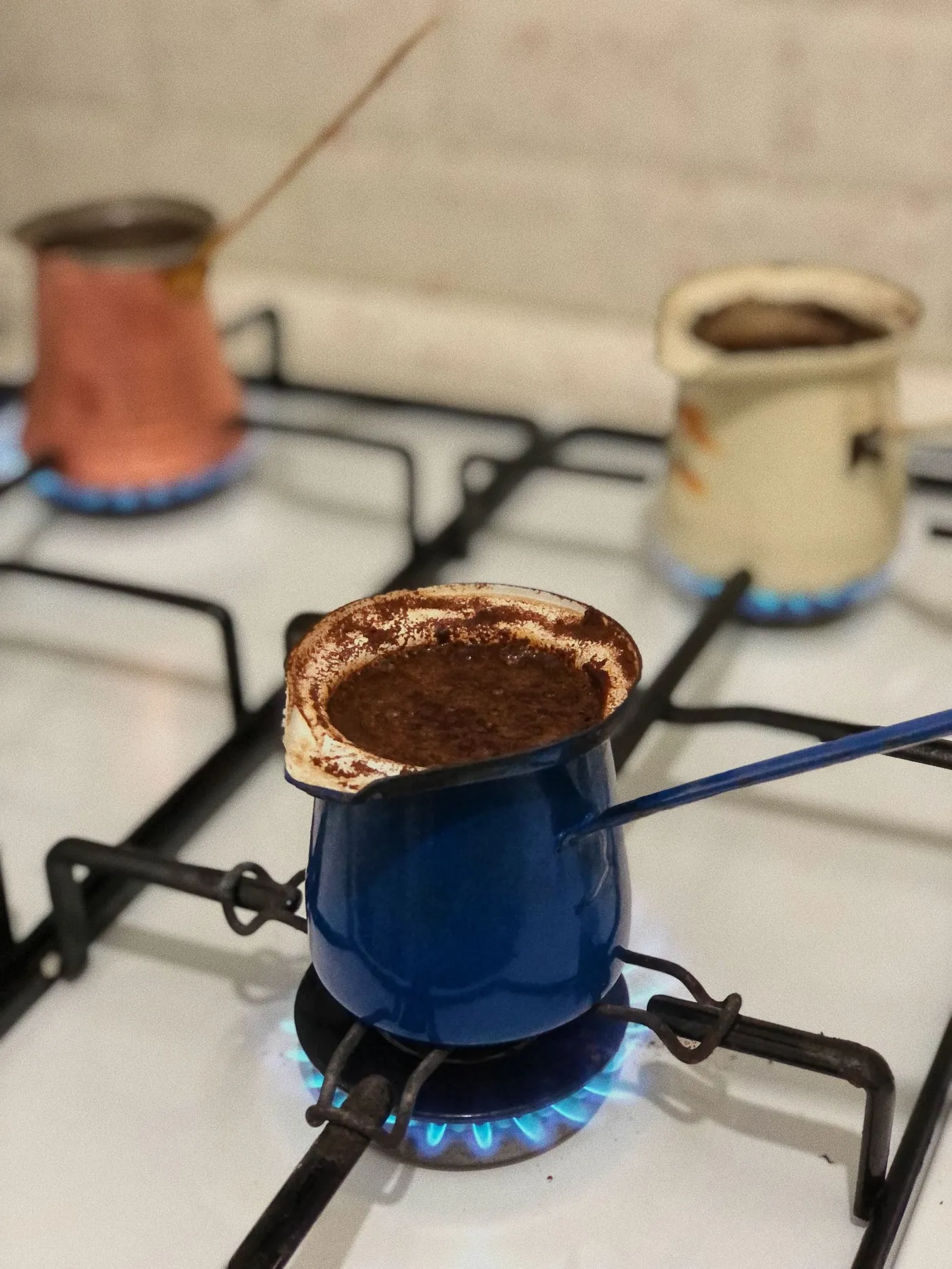
5. Set it on low heat. This is where the foam is made. The slower the pot warms, the finer and thicker the foam.
6. Lift it off when the foam rises. After a few minutes, a dark foam gathers at the edges and starts climbing the neck. Lift the pot off the heat as it rises. Some people return it to the heat once for a second rise; it's optional.
7. Pour foam first. Spoon a little foam into each cup, then pour slowly from low over the cup so the rest of the foam lands on top.
8. Let it settle a minute. The grounds sink to the bottom. Sip from the top and stop when you reach them.

Turkish Coffee Without a Cezve: Use Your Smallest Saucepan
Reach for the smallest saucepan in the cupboard; a milk pan with a pour spout is ideal. The method is the same: coffee, cold water, sugar if you like, one stir, low heat, lift it off when the foam rises.
Two adjustments help. Make at least two cups at a time, because a wide pan spreads one cup too thin for the foam to climb. And pour with a spoon ready to guide the foam into the cups. Once you've made a few cups this way, a cezve is the natural next step; the narrow neck does that work for you.
Turkish Coffee on an Induction Stove: The Pot Has to Be Magnetic
Hold a fridge magnet to the bottom of your pot. If it sticks, the pot works on induction. Induction cooktops only heat magnetic metal, so copper and brass cezves won't register. You have two options: a cezve sold as induction-ready, with a magnetic base wide enough for the cooktop to detect, or an induction adapter plate under the pot you already own. Our 12 oz cezve is made for gas, electric coil and ceramic cooktops, so on induction it needs the plate.
Keep the setting low. Induction warms quickly, and the foam needs a slow rise.
How to Get More Foam: Five Things That Build It
The foam (köpük) is the dark, fine-bubbled layer that tells you the cup was made slowly. Five things build it:
- Cold water. A slow start gives the foam time to build.
- Fresh, powder-fine coffee. Freshly roasted coffee foams best, and the finer the grind, the denser the foam.
- One stir, before the heat. After that, let it rise undisturbed.
- Low heat. Patience here pays off more than anywhere else.
- The right size pot. Fill it about half to two-thirds full, so the coffee sits deep enough to climb the neck.
Serving several cups? Spoon foam into each one before you pour, so everyone gets their share.
Sade, Orta or Şekerli: How Sweet, in Teaspoons
In Turkey you order the sweetness with the coffee, because the sugar goes in the pot, not the cup. Per cup:
- Sade: plain, no sugar. The way to taste the coffee itself.
- Az şekerli: a little sugar, about half a teaspoon.
- Orta: medium, about one teaspoon. The most common order.
- Şekerli: sweet, about two teaspoons.
Making cups at different sweetness? Brew them in separate batches.
Turkish Coffee with Cardamom: One or Two Pods
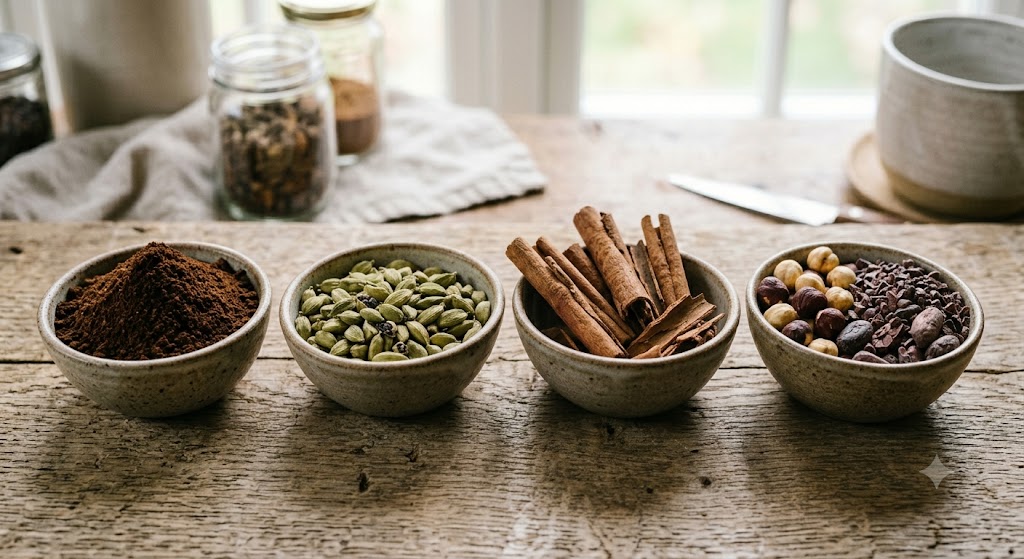
Crack one or two cardamom pods with the flat of a knife and drop them in with the coffee. It is a pairing with deep roots in the Middle East. Add the pods, or a small pinch of ground cardamom, to the pot with the coffee and water, then brew exactly as above. The spice adds bright, citrusy notes that lift the coffee.
Or start with Lezzet Cardamom, where organic cardamom is ground in with the coffee, so every cup comes out the same.
Six Habits That Keep the Foam Thick
When a cup comes out with less foam than you hoped, one of these is usually the reason, and each takes seconds to change:
- Keep the heat low. A slow rise is what builds the foam.
- Start with cold water. Warm water rushes the brew.
- Stir once, before the heat. Stirring later breaks the foam as it forms.
- Watch the pot. The foam rises quickly at the end, so stay close and lift it off as it climbs.
- Use powder-fine coffee. Espresso grind is too coarse to foam or settle.
- Give it a minute. A short wait lets the grounds settle before the first sip.
How to Serve Turkish Coffee: A Glass of Water and a Piece of Lokum
The cup arrives on a saucer with a glass of water beside it. Sip the water first to refresh your palate. A piece of Turkish delight (lokum) or a small chocolate often sits on the saucer.
It's a coffee for sitting down. For five hundred years it has been a ritual of hospitality and conversation. When the cup is done, some turn it upside down on the saucer and read the grounds, a social tradition called fal. For more on the cup, see how to drink Turkish coffee.
Three Ways to Change It Up: Iced, Mocha, Affogato
Iced Turkish coffee. Brew a double-strength cup, let it settle and cool, then pour the coffee off the grounds over ice. Add milk if you like.
Turkish mocha. Add a teaspoon of unsweetened cocoa to the pot with the coffee and water. Finish with a pinch of cinnamon.
Turkish coffee affogato. Let a strong cup settle, then pour it over a scoop of vanilla ice cream.
Greek, Bosnian and Arabic Coffee: How They Differ
Order "Turkish coffee" in Athens or Sarajevo and you get a close relative under another name. Greek coffee is brewed the same way in a briki. Bosnian coffee adds the coffee to water that is already hot. Arabic coffee is a lighter roast, often spiced with cardamom. And if you're wondering how it compares with a machine shot, read Turkish coffee vs espresso.
To go deeper, the Coffee Series follows coffee from the tree to the cup. Part 12, Turkish Coffee, Start to Finish, is coming soon.
Turkish Coffee Brewing Questions
How do you make Turkish coffee step by step?
Spoon 7 g of powder-fine coffee per cup into a cezve with 60–70 ml of cold water, add sugar now if you take it, and stir once. Set it on low heat, lift it off when the foam rises, pour foam first, and let it settle for a minute before you sip.
Can I make Turkish coffee without a cezve?
Yes. Use the smallest saucepan you own, ideally a milk pan with a spout. Keep the same coffee, cold water and low heat, and make two cups at a time so the coffee sits deep enough for the foam to rise.
How do I get more foam on Turkish coffee?
Start with cold water, use fresh powder-fine coffee, stir only once before the heat, keep the heat low, and use a pot that is half to two-thirds full. When serving more than one cup, spoon foam into each cup first.
How much coffee and water do I use for Turkish coffee?
About 7 g of powder-fine Turkish coffee (one heaping teaspoon) to 60–70 ml of cold water, which is one small Turkish coffee cup. Multiply for more cups.
Can I make Turkish coffee on an induction stove?
Yes, with a cezve whose base is magnetic and wide enough for the cooktop to detect, or with an induction adapter plate. Copper and brass pots will not register on induction. Use a low setting, because induction warms quickly.
Do you drink the grounds in Turkish coffee?
No. The grounds settle into a soft layer at the bottom of the cup. Sip the coffee from the top and stop when you reach them.