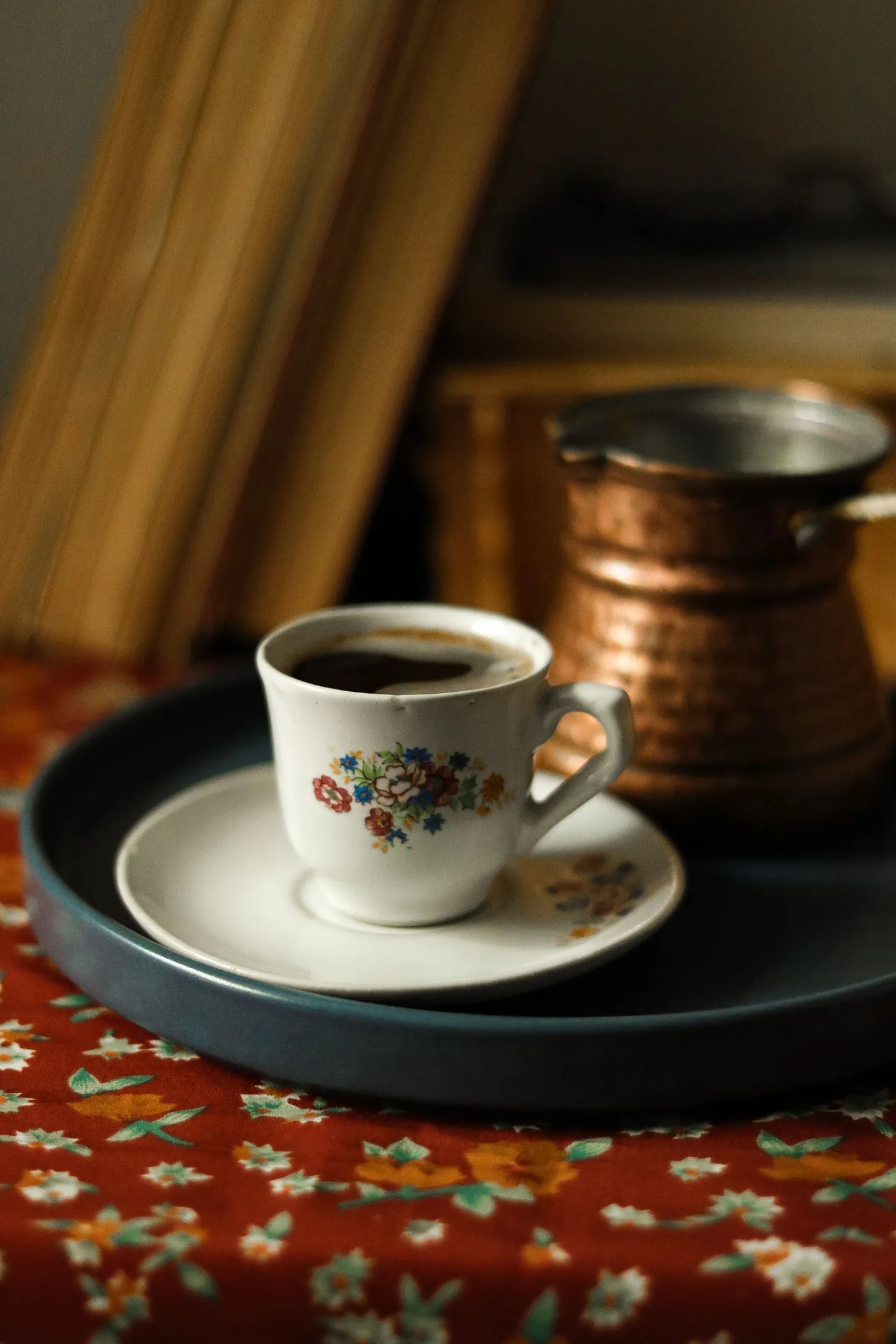
The best Turkish coffee to buy comes down to two things: where the beans are grown and which flavor fits how you drink it. A first-time buyer usually wants the classic Traditional profile, while others reach for a warm-spiced or aromatic blend — all built on the same specialty-grade Arabica.
Lezzet keeps the decision simple. It's specialty-grade Arabica, roasted in-house in small batches in the U.S. and ground powder-fine for Turkish coffee, with a range that runs from classic to warm blended flavors.
Quick Recommendation
If you are buying Turkish coffee for the first time, start with Traditional Turkish Coffee, the classic cup.
Prefer a spiced cup? Try Cinnamon or Cardamom. If you are buying for a cafe, restaurant, market, office, or hospitality program, start with 5 lb wholesale Turkish coffee.

Where the World's Best Coffee Grows
Great coffee is decided long before the roast. Nearly all of the world's coffee comes from a band wrapped around the equator known as the Bean Belt, between the Tropic of Cancer and the Tropic of Capricorn.
These equatorial regions share exactly what Arabica needs: high altitude, steady warm temperatures, rich volcanic soil, and reliable rainfall. Closer to the equator the cherries ripen slowly and build more sugar and complexity — which is why the countries along this belt grow the most sought-after beans in the world.
Three broad origins define it. Latin America (Colombia, Brazil, Guatemala) is known for balanced, chocolatey, nutty cups. Africa and the Middle East (Ethiopia and Yemen) is the birthplace of coffee itself and the historic heart of Turkish coffee — bright, floral, and aromatic. Asia-Pacific (Indonesia) leans heavy and earthy. Lezzet blends two of them: Brazil and Ethiopia.
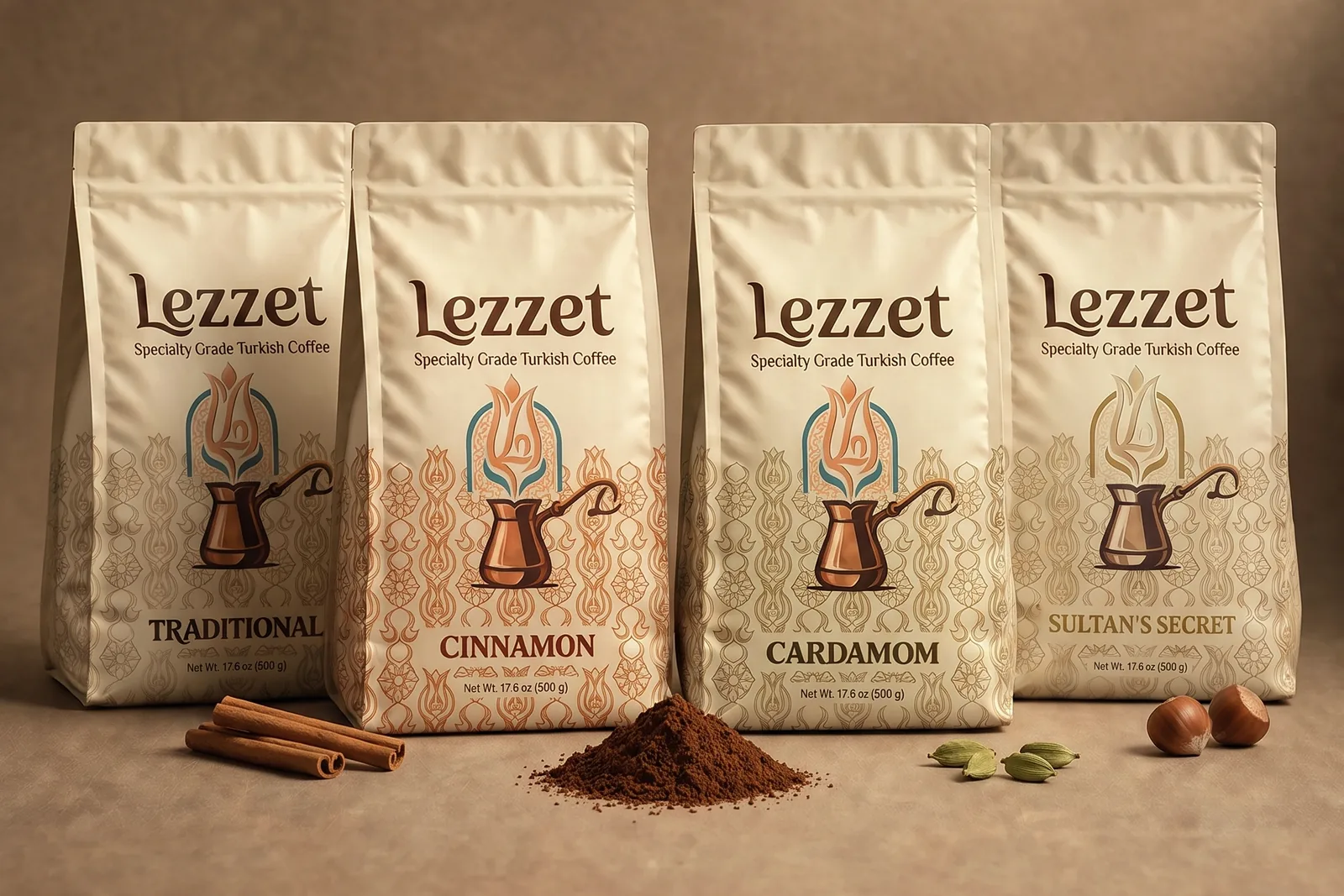
Flavor Guide
What Makes Turkish Coffee Different
Turkish coffee uses an extra-fine grind that is finer than espresso. The coffee is warmed slowly with cold water in a cezve and lifted off before it boils, then served unfiltered so the grounds settle at the bottom of the cup. The grind matters because a coarse grind will not create the same body, foam, or texture.
Lezzet is made for that brewing method. The beans are roasted in-house, ground powder-fine, and packed in resealable bags so customers can press out extra air after opening.

Which Lezzet Should You Buy?
If you grind your own, Whole Bean is the same blend left whole.
To keep it simple: a classic drinker should start with Traditional. If you like to explore flavors, Cinnamon or Cardamom is the better starting point. Businesses should head to the wholesale page for 5 lb bags.
Turkish Coffee Buying Questions
Which Turkish coffee is best for a first-time buyer?
Traditional is the easiest starting point because it gives you the classic coffee-forward profile. Choose the Turkish Coffee Kit if you want to compare Traditional, Cinnamon, and Cardamom, with the cezve, before settling on a favorite.
Should I choose Traditional, Cinnamon, or Cardamom Turkish coffee?
Choose Traditional for a classic cup, Cinnamon for a warm and gentle spice, or Cardamom for a bolder aromatic profile. All three use the same powder-fine Turkish coffee grind.
Do I need a special pot to brew Turkish coffee?
No. A cezve is the traditional pot and helps create foam, but a very small saucepan also works. The most important starting point is fresh coffee ground powder-fine for Turkish coffee.