The three main coffee processing methods are washed, natural and honey, and the difference is simple: how much of the fruit stays on the bean while it dries.
A coffee bean is a seed, and it grows inside a cherry. Before anyone can roast it, the fruit has to come off. When and how that happens decides a surprising amount of the flavor. In Part 6 I promised this mattered. Here's why.
What Is Inside a Coffee Cherry?
Think of it as a tiny, very committed onion. From the outside in: a thin skin, a layer of sweet pulp, a sticky coat called mucilage, a papery shell called parchment, and finally the seed. Usually two of them, facing each other.
Processing is the job of removing all that and drying the seed. There are three classic ways to do it.
What Is Natural Process Coffee?
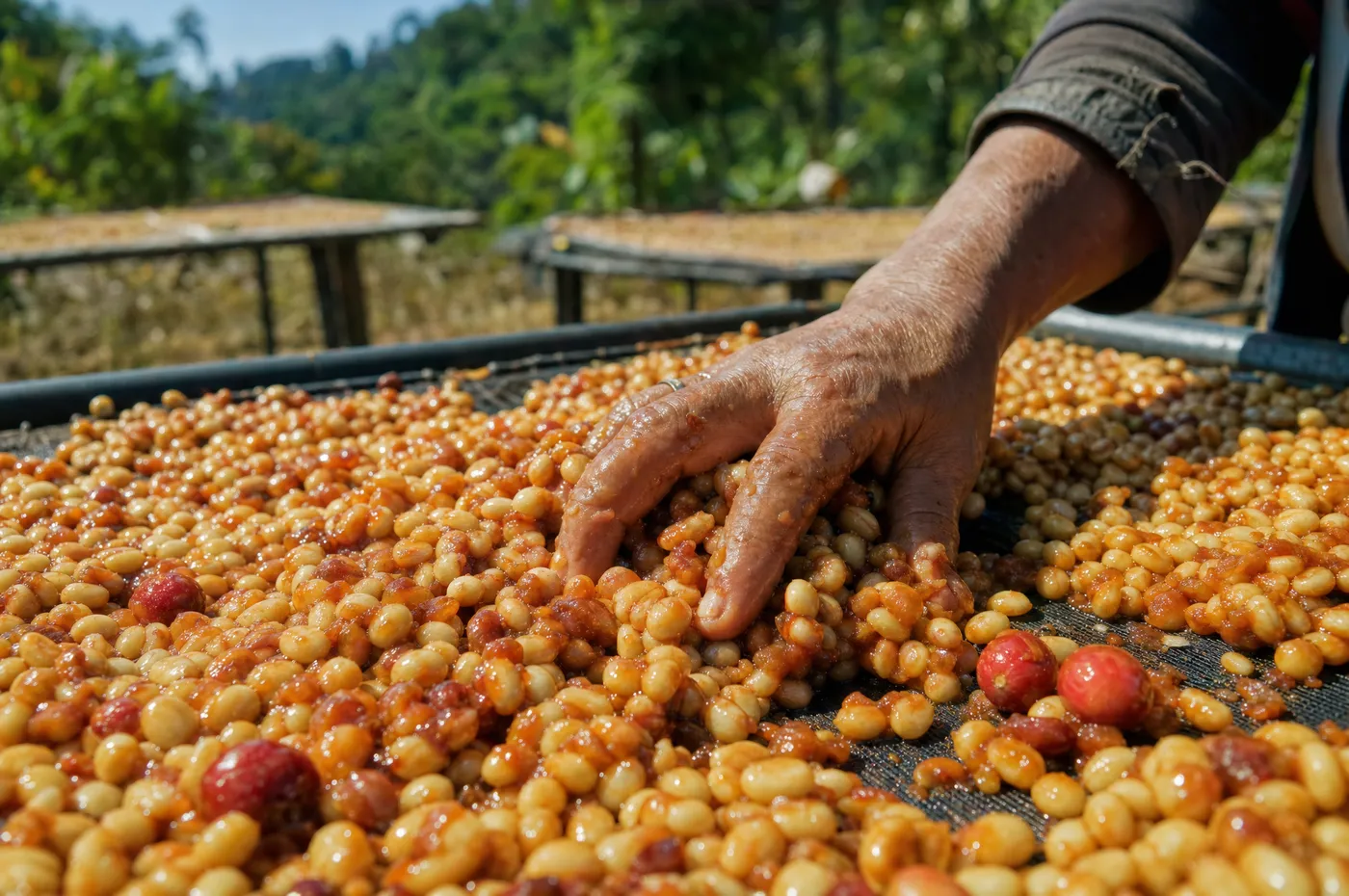
The oldest method, and the most obvious: pick the cherries and dry them whole in the sun. The bean sits inside its fruit for weeks, the way a grape becomes a raisin. Then the dried husk is stripped off in one go.
The cup tends to be fruity and full: berry, tropical fruit, a winey sweetness, plenty of body. It takes patience, though. The cherries are raked several times a day so they dry evenly.
What Is Washed Coffee?
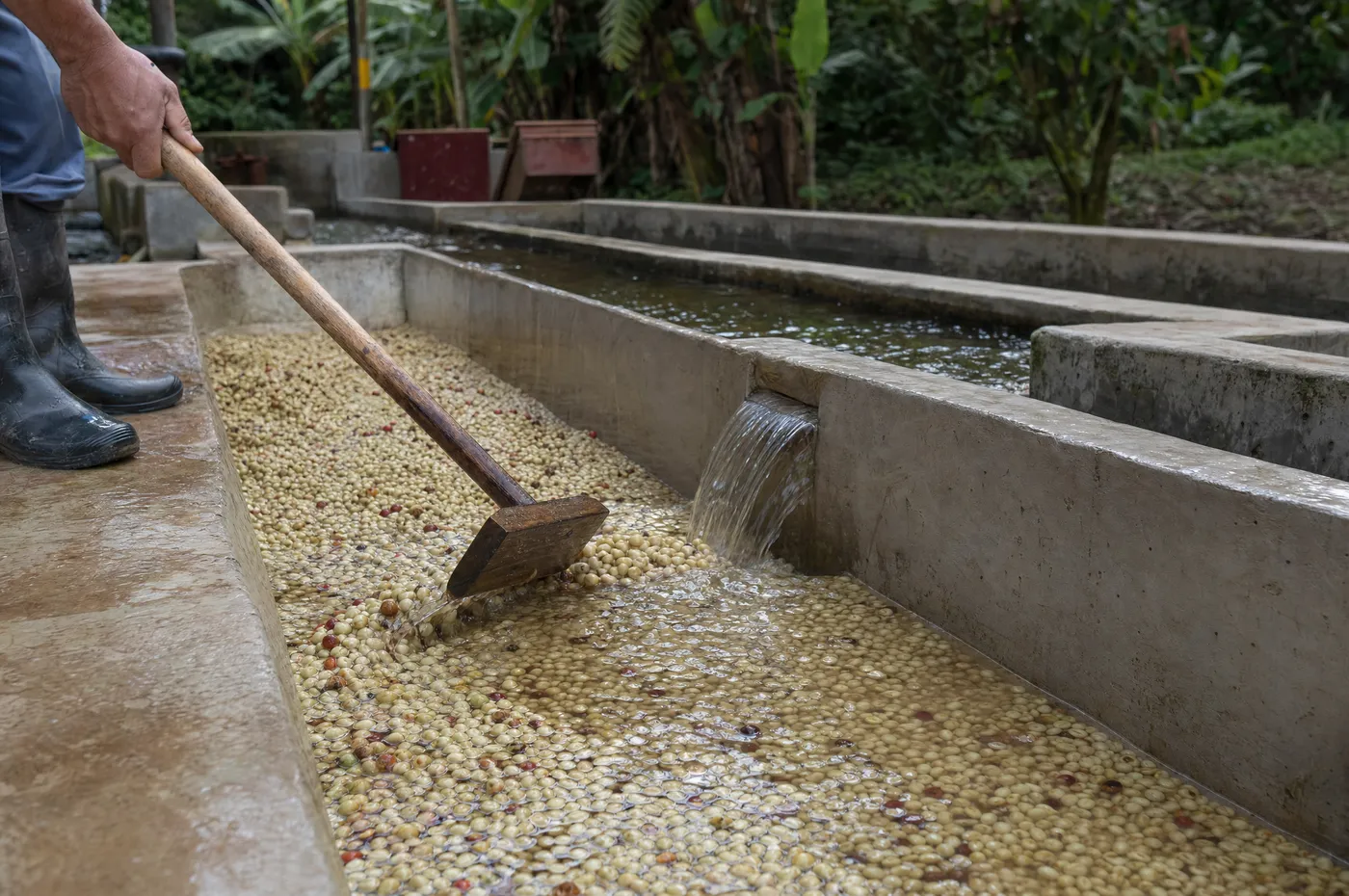
The opposite approach. The skin and pulp are squeezed off by machine soon after picking. The beans then rest in water tanks until the sticky mucilage loosens, get washed clean and dry in their parchment.
With the fruit gone early, the bean speaks for itself. Washed coffees tend to taste clean and bright, with clear acidity and a lighter body. If Part 5 made you a fan of "bright," washed coffee is your corner.
Where Did Washed Coffee Come From?
The Caribbean, as far as anyone has written down. In the 1700s the French colony of Saint-Domingue, today's Haiti, grew a huge share of the world's coffee, and its planters were washing beans at scale.
What Is Honey Process Coffee?
The middle path, made famous in Costa Rica. The skin and pulp come off, but some of the sticky mucilage stays on while the bean dries. Producers grade it by how much they leave: yellow honey keeps a little, red honey more, black honey the most.
More mucilage usually means more sweetness and body. The cup lands between washed and natural: round, sweet and gently fruity.
What Happens to All That Fruit?
Some of it becomes a drink of its own. The dried skins are steeped like tea and sold as cascara, which tastes of dried fruit.
Which Processing Method Is Best?
None of them, and all of them. Washed gives clarity and lift, natural gives fruit and body, honey sits in between. It is less a ranking than a choice of style, which is why so many great blends mix them.
Our own blend works on the same idea. Lezzet Traditional pairs a rich coffee roasted dark with a bright one roasted lighter: the rich one brings velvet, dark chocolate and nut, the bright one brings the lift. Each is roasted on its own, then blended and ground powder-fine.
Next up, Part 8: light vs dark roast, and why the roaster is the biggest flavor dial of all.
Coffee Processing Methods: FAQ
What are the main coffee processing methods?
Washed, natural and honey. Washed removes all the fruit before the bean dries. Natural dries the whole cherry with the bean inside. Honey removes the skin but dries the bean with some of its sticky fruit still on.
What does washed coffee taste like?
Clean and bright. With the fruit gone before drying, the bean's own acidity and character come through clearly, often with citrus or floral notes and a lighter body.
What does natural process coffee taste like?
Fruity and full. The bean dries inside the cherry for weeks, and the cup often shows berry or tropical fruit notes, a heavier body and a winey sweetness.
Is honey process coffee made with honey?
No. "Honey" refers to the sticky layer of fruit, called mucilage, left on the bean as it dries. The cup tends to land between washed and natural: sweet, round and gently fruity.
Which coffee processing method is best?
None is best; each is a different style. Washed favors clarity and brightness, natural favors fruit and body, and honey sits in between. Many great blends use more than one.