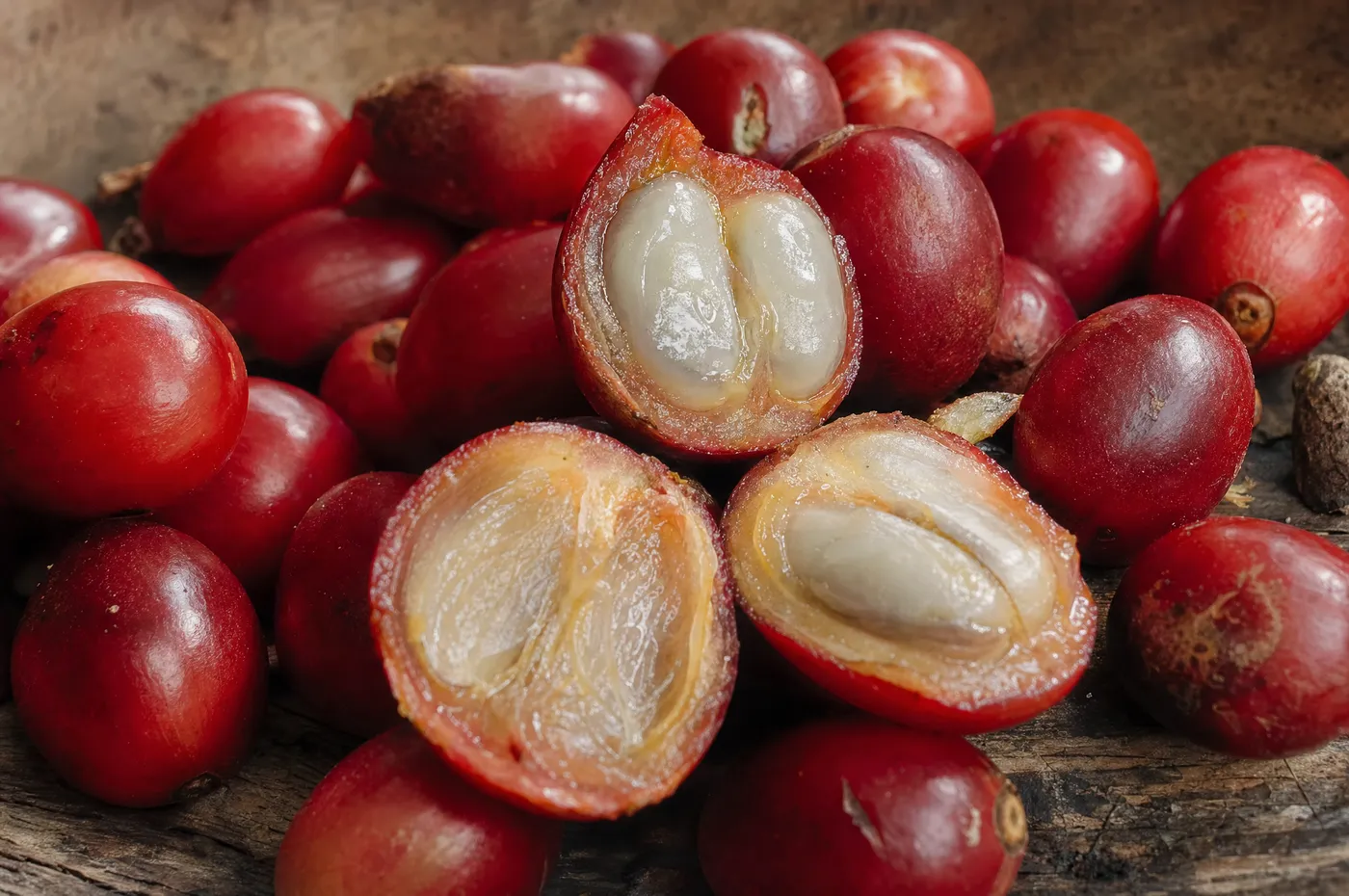
Coffee flavor notes like chocolate, blueberry or jasmine are not added to the bag. They come from aroma compounds the bean builds as it grows and roasts, which happen to match the ones in those foods.
Nobody sneaks a blueberry into the roaster. I checked. In Part 5 we tasted the acidity. Now for the rest of the cup: how it feels, and why it smells like a fruit bowl.
What Is Body in Coffee?
Body is how the coffee feels, not how it tastes. Skim milk and cream can taste alike; one is light, one is heavy. Coffee works the same way.
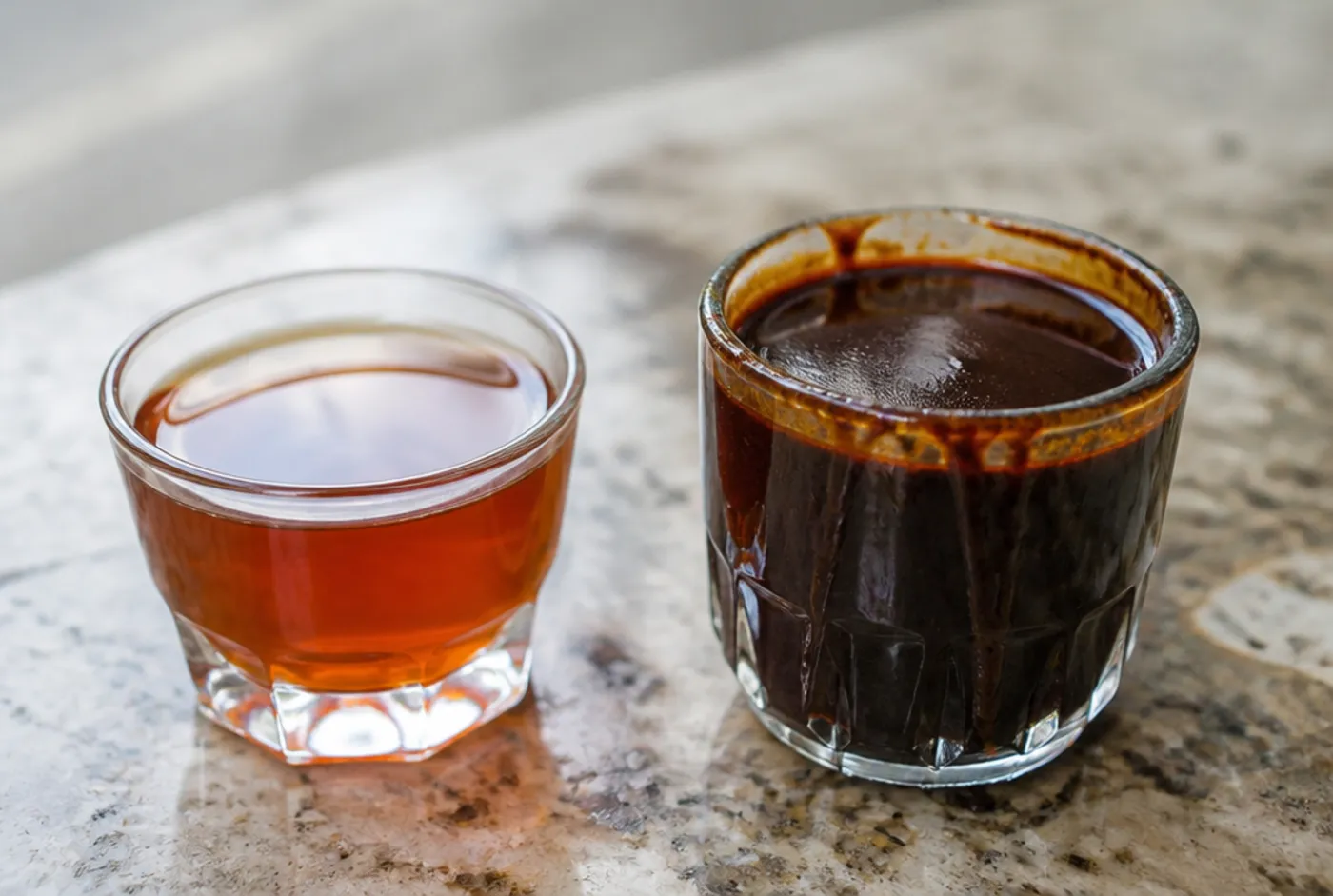
A light-bodied cup feels like tea. A full-bodied one feels like velvet and coats your tongue. Two things decide which: what the bean carries (oils, dissolved sugars and fine particles) and what your brewer lets through.
Why Does the Brewer Change the Body?
Filters. A paper filter holds back most of the oils and the finest particles, so the cup tastes clean and light. A metal mesh, like a French press, lets them through, so the cup feels heavier.
Turkish coffee skips the filter entirely. The coffee is ground powder-fine and the grounds settle in the cup, so every oil and fine particle stays in the drink. That is why it feels so thick and velvety. More on that in Part 12.
Where Do Flavor Notes Come From?
Mostly from your nose. The unroasted bean is full of sugars, acids and proteins. In the roaster they react and break apart into a huge range of aroma molecules, and many of those are the very same molecules that make fruit, flowers and chocolate smell the way they do.
So when a bag says "blueberry," the taster is not being poetic. Your nose found a familiar molecule and filed it under the nearest food it knows.
What Is the Coffee Flavor Wheel?
A shared dictionary, drawn as a circle. Broad families sit in the middle: fruity, floral, sweet, nutty and cocoa, spices, roasted. Each one splits into more specific notes toward the edge: fruity becomes berry, berry becomes blueberry.
You start in the middle and work outward. "It's fruity" turns into "it's a dark berry" turns into "blackberry." It is surprisingly fun with two cups side by side.
What Changes a Coffee's Flavor Notes?
Everything we've covered so far, plus two parts still to come.
The plant and the place. Species, variety and soil set the starting palette.
Altitude. As Part 4 showed, slow-ripening mountain cherries build more acidity and aroma, so high-grown coffees lean fruity and floral.
Processing. Whether the bean dries inside its fruit or out of it changes the cup a lot. That is Part 7.
Roast. Lighter roasts keep the fruit and flowers. Darker roasts trade them for chocolate, caramel and nut, and usually more body. Part 8 covers this in full.
Can One Cup Have Both Body and Brightness?
That is exactly what our blend is built for. Lezzet Traditional pairs a rich coffee roasted dark with a bright one roasted lighter. The rich one brings the body: velvety, with notes of dark chocolate and nut. The bright one brings the lift. Each is roasted on its own, then blended and ground powder-fine, so the Turkish pot keeps every bit of that body.
Next up, Part 7: washed, natural and honey, or what happens to the fruit around the bean.
Coffee Body and Flavor Notes: FAQ
Are coffee flavor notes added flavors?
No. In an unflavored coffee, notes like chocolate, blueberry or jasmine are descriptions. The roasted bean makes aroma compounds that remind your nose of those foods, and tasters name them so you know what to expect.
What is body in coffee?
Body is how the coffee feels in your mouth: light and tea-like, or heavy and velvety. Coffee professionals define it as the tactile feeling of the liquid and score it on the cupping form.
What is the coffee flavor wheel?
The Coffee Taster's Flavor Wheel is a chart of coffee tastes and aromas, from broad families in the middle (fruity, floral, sweet, nutty and cocoa) to specific notes at the edge. The current version was built in 2016 by the Specialty Coffee Association and World Coffee Research.
What changes the flavor notes of a coffee?
The plant and where it grows, the altitude, how the fruit is processed, the roast and the brew. Lighter roasts keep fruity and floral notes; darker roasts lean toward chocolate, caramel and nut.
Why does Turkish coffee have so much body?
Nothing is filtered out. The coffee is ground powder-fine and served with the grounds settling in the cup, so the oils and the finest particles stay in the drink and give it a thick, velvety feel.