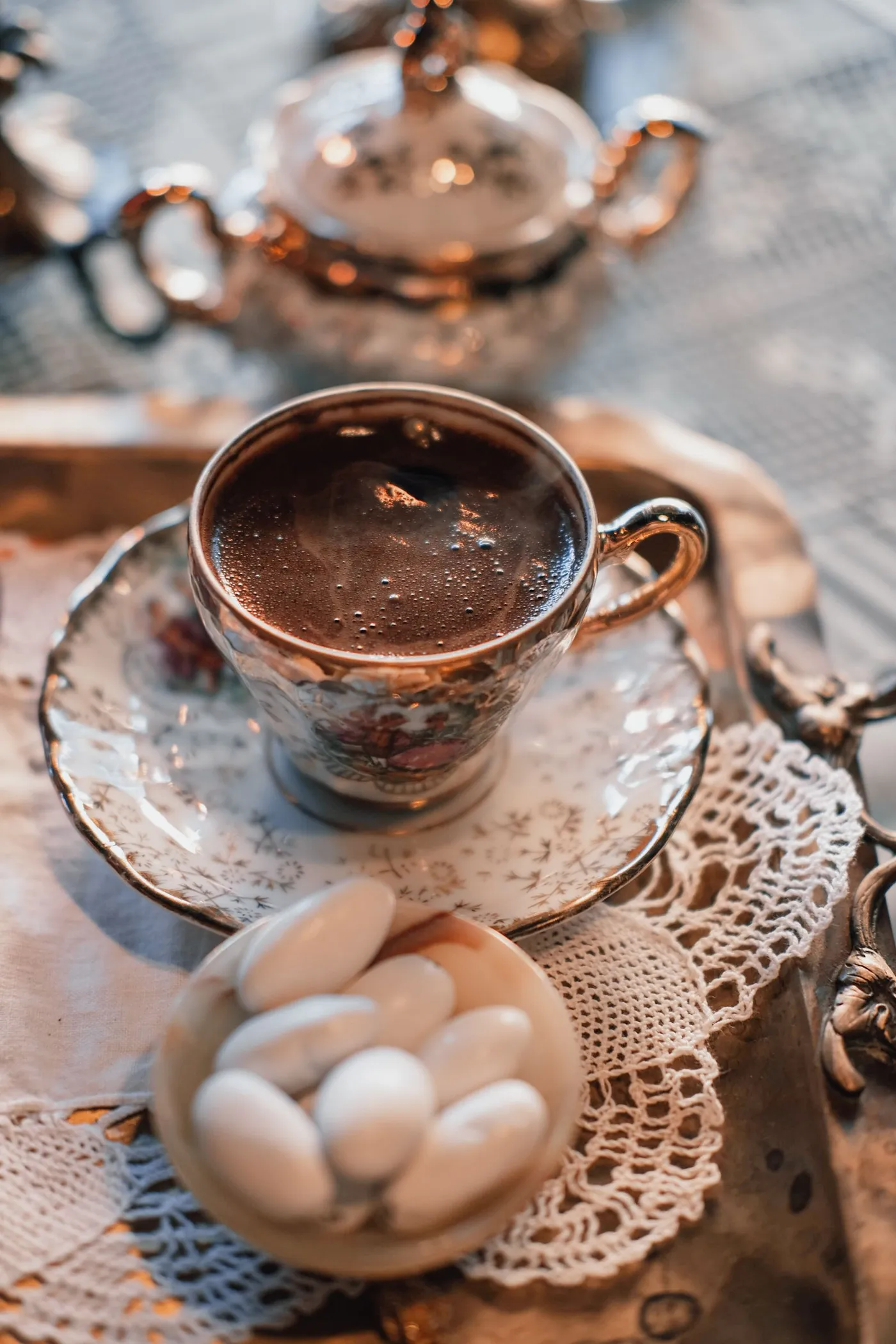
Sip the water first, wait a minute for the grounds to settle, then sip from the top and stop where the grounds begin. Turkish coffee is served unfiltered, so the way you drink it matters as much as the brew.
The goal is simple: preserve the foam, let the grounds settle, sip from the clean top layer, and stop before the sediment at the bottom.
The Full Turkish Coffee Drinking Ritual
- Brew in a cezve to the first foam. Lift the cezve off the heat before it boils, so the foam stays intact.
- Pour into a demitasse cup. Pour low and slow so the tan foam lands on top instead of breaking apart.
- Wait about 60 seconds. This lets the grounds settle and gives the foam time to set.
- Sip the cold water served alongside. Water cleanses the palate so the first sip tastes clear.
- Take small sips. Turkish coffee is concentrated, so small sips go further.
- Stop at the sediment line. The last third of the cup contains settled grounds. That part is not meant to be swallowed.
- Optional: flip the cup for fal. Turn the cup onto the saucer, let it cool, then read the patterns left by the grounds.
The two easy slips are skipping the wait and drinking into the grounds. If every sip feels gritty, the cup was moved, stirred, or drunk too quickly.

How Turkish Coffee Should Taste
A well-made Turkish coffee tastes warm and deep, with dark chocolate up front and a finish that stays with you.
Start with body. The sip should feel thick and velvety because Turkish coffee keeps the oils and fine particles that filtered coffee leaves behind.
Then look at the foam. A proper cup has visible tan foam on the surface. It should look creamy and beige rather than white and bubbly, and it should not disappear immediately.
Last is how the sip moves. A good one has a beginning, middle, and finish: coffee first, depth in the middle, and a warm finish that lingers. In a flavored cup like cardamom or cinnamon, the spice should support the coffee instead of taking over.

The 30-Second Taste Test
If your cup passes all three checks, it is well-brewed.
- Look. Is there visible tan foam?
- Sip. Do you taste a beginning, middle, and finish?
- Wait. Thirty seconds later, can you still taste it, and is the aftertaste pleasant?
Three yeses usually means the brew is working. Two or fewer means something is off, either in the brewing technique or in the coffee itself.
If the Cup Isn't Right
The cup usually tells you what to change next time:
| What you taste | What to change |
|---|---|
| Sharp or harsh | The heat was too high. Use low heat and lift the pot as the foam climbs the neck. |
| Sour or over-extracted | The pot went back on the heat too many times. One rise of foam is enough. |
| Watery or thin | There was not enough coffee, the cup was under-brewed, or the grind was too coarse. |
| Gritty in every sip | The cup was stirred, shaken, or moved before the grounds had time to settle. |
| Flat, cardboard-like, no aromatics | The coffee is stale, or it lost too much aroma before brewing. |
| All spice, no coffee | The spice is overpowering the base coffee. A good flavored Turkish coffee should still taste like coffee first. |
Turkish coffee is small, but it should never feel empty. The best cup gives you foam at the top, body through the sip, and a clean finish that makes you want the next one.