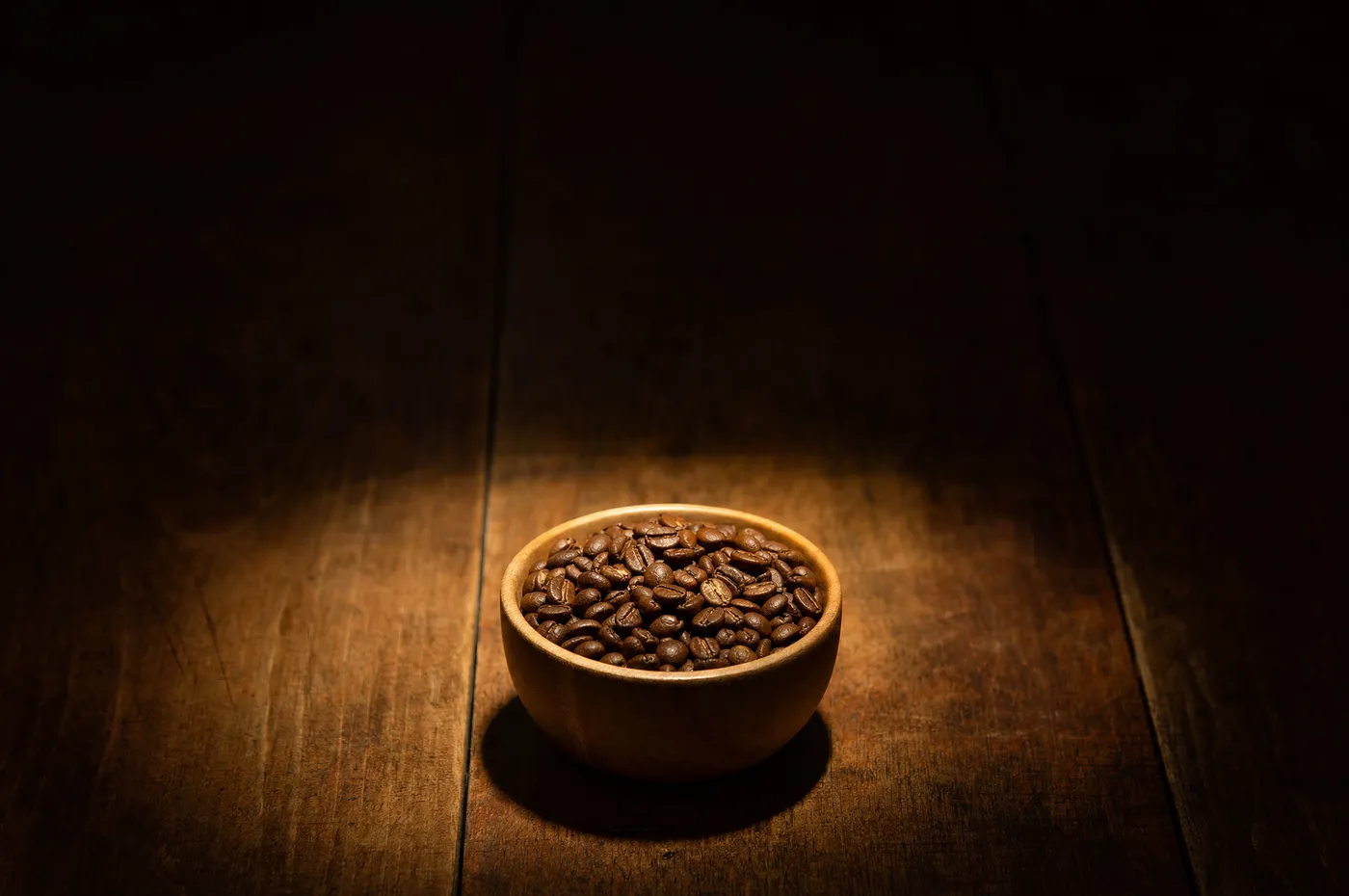
Single origin coffee comes from one place and tastes like that place; a blend combines coffees from two or more places to make one balanced cup that tastes the same every time.
Think of a soloist and a band. A soloist shows you exactly who they are. A band can play things no single musician can. Both fill concert halls. In Part 8 we met the roaster's biggest dial. Now: one coffee, or several?
What Does Single Origin Mean?
It means the coffee comes from one source. How narrow that source is varies: a whole country, a region, one farm, sometimes one small lot from one hillside.
The appeal is traceability. You can taste a place: its altitude, its soil, how the cherries were processed (that was Part 7). A washed coffee grown high up tastes bright and clean; a natural from lower down tastes fuller and fruitier. A single origin lets you hear that one voice clearly.
Why Does Single Origin Change From Year to Year?
Because it is a crop. Rain, sun and the harvest shift each year, and so does the cup. For fans, that is the fun: like wine, each season is a new vintage.
What Is a Coffee Blend?
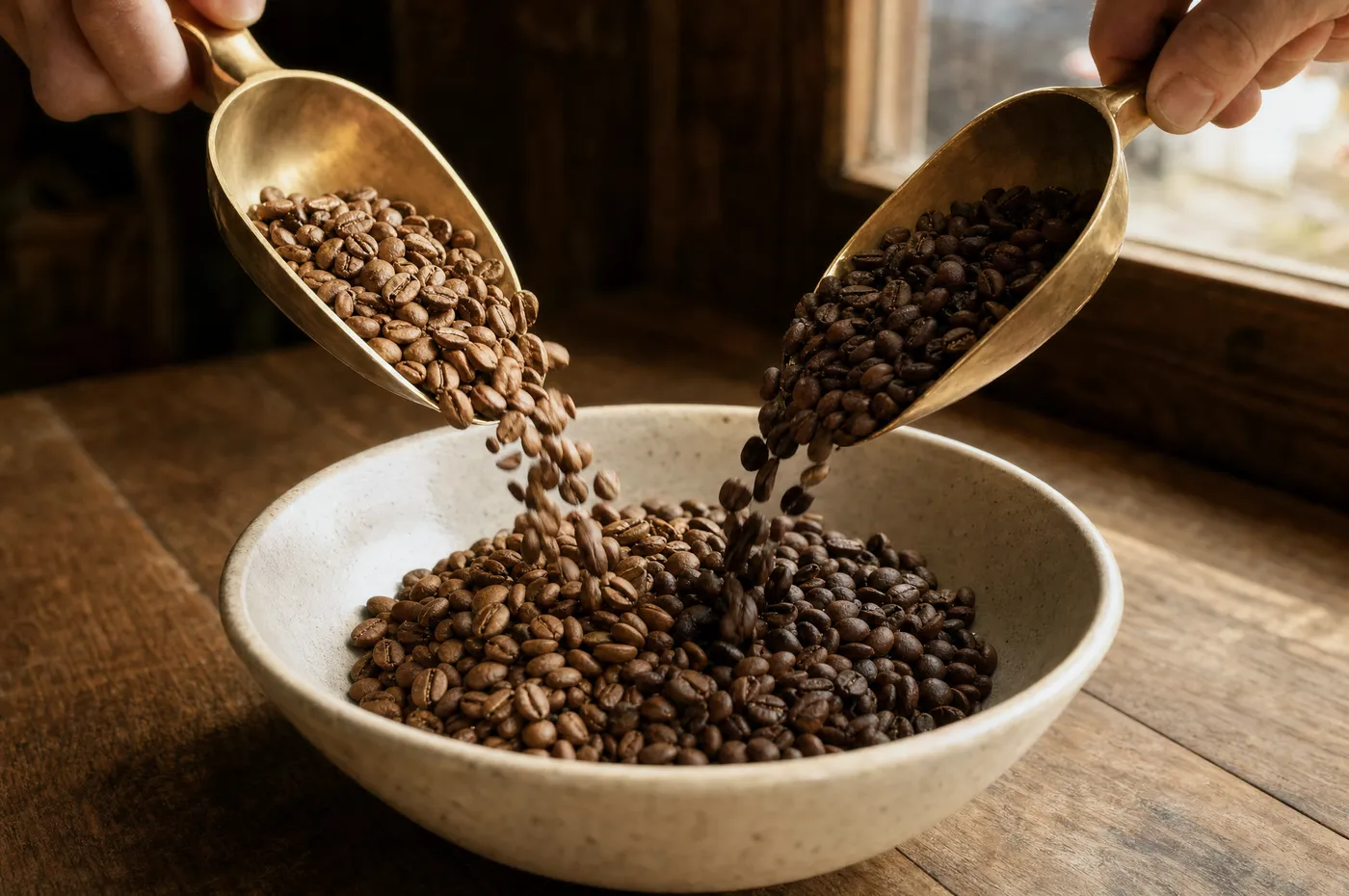
A blend combines two or more coffees, chosen so each covers what the other doesn't. One brings body and sweetness, another brings brightness or aroma. The roaster's job is the arrangement.
The other job is consistency. Since each harvest tastes a little different, blenders taste and adjust so the cup you loved in March is the cup you get in October.
What Was the First Coffee Blend?
Mocha-Java, and it is centuries old. Mocha was the first coffee traded commercially, shipped from Yemen's Red Sea port of the same name. Java, grown on the Indonesian island, came next. Putting them together gave European drinkers both ends of their coffee world in one cup.
Why Is Most Espresso a Blend?
Espresso is coffee turned all the way up: a small, concentrated shot that exaggerates whatever is in the bean. Many roasters blend for it, pairing a coffee with body and sweetness with one that adds lift, so the shot holds together. Espresso blends come in every roast level, light to dark.
Single origin espresso is worth trying too. It is less of a chord and more of a single, loud note, which is exactly why people order it.
Single Origin vs Blend: Which Should You Choose?
Choose single origin when you want to explore: to taste a place, compare washed with natural, or follow one farm year to year. Pour-over and other gentle brewers show off that clarity well.
Choose a blend when you want balance and a cup you can count on every morning, or when the brew method is intense, as with espresso and Turkish coffee.
There is no wrong answer. Quality comes from the beans, not from how many places they come from.
Our Whole Bean Traditional Coffee is a blend for exactly that reason: it lets one cup be rich and bright at once. Grind it for espresso, moka pot, drip or French press. In Part 10 I'll show you how we put ours together, and why the two coffees never share a roaster.
For Turkish coffee, the whole beans need a grinder capable of a true powder-fine setting. Traditional Turkish Coffee gives you the same blend already ground powder-fine.
Single Origin vs Blend: FAQ
What is the difference between single origin and blend coffee?
A single origin coffee comes from one place: a country, a region, or as narrow as one farm or one lot. A blend combines coffees from two or more places so their strengths add up to one balanced cup.
Is single origin coffee better than a blend?
Neither is better; they do different jobs. Single origin shows you one place clearly and changes with each harvest. A blend is built for balance and for tasting the same, bag after bag.
Why is most espresso a blend?
Espresso concentrates everything, so many roasters blend for balance: one coffee for body and sweetness, another for brightness or aroma. Single origin espresso exists too, and it tends to be more distinctive and more variable.
What is the oldest coffee blend?
Mocha-Java, the world's oldest recorded coffee blend. It paired coffee from Yemen's port of Mocha with coffee from Java, the two great commercial coffees of the 1700s.
Is a blend lower quality than single origin?
No. Quality depends on the beans, not on how many origins go in. A blend made of specialty-grade coffees is specialty coffee.