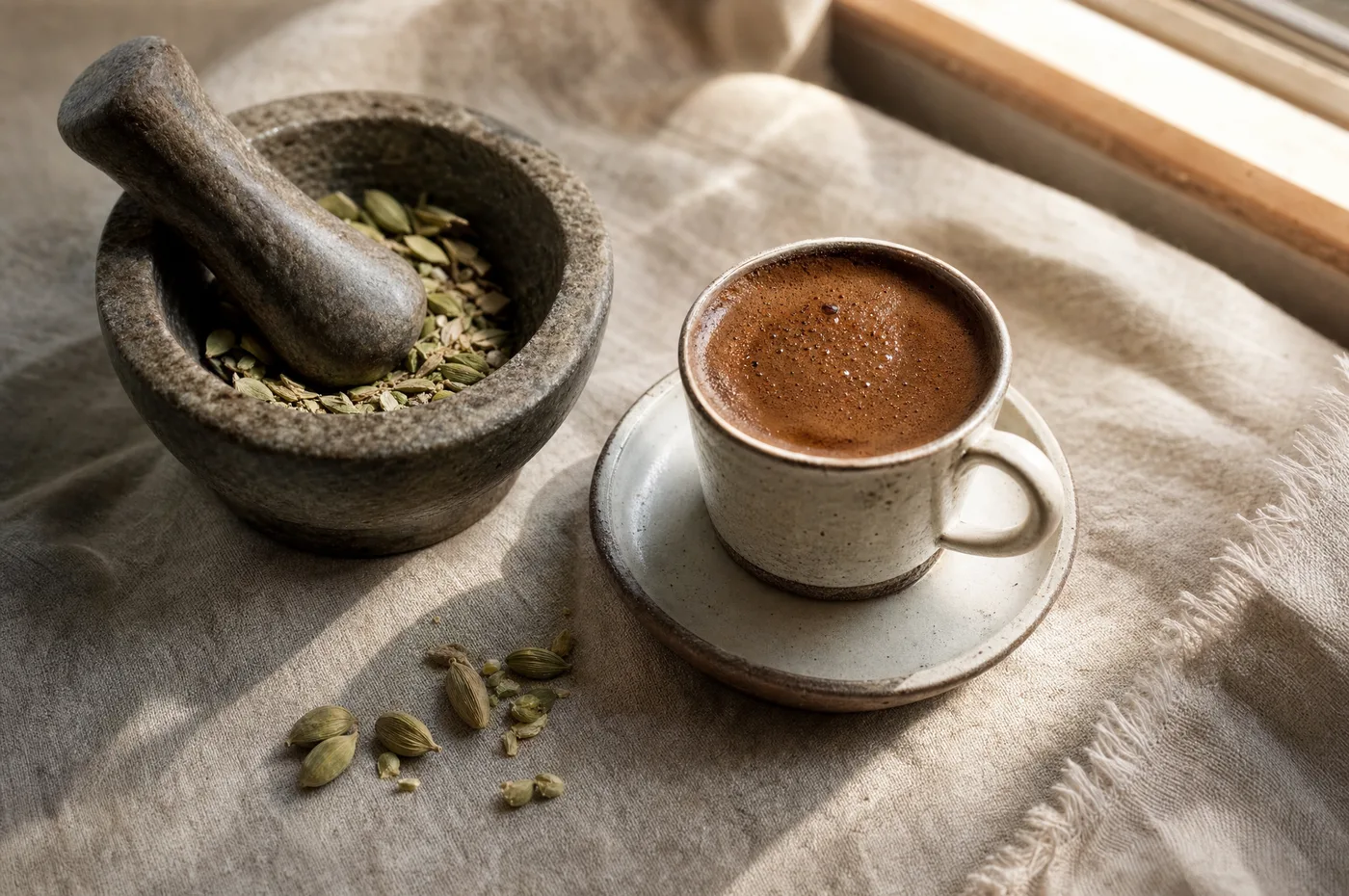
Cardamom is the small, fragrant seed pod of a plant in the ginger family, and by the time anyone wrote Arabic coffee down in detail, it was already in the pot. The rule that matters is the amount: a pod or two lifts the cup, a spoonful turns it to perfume. Below: how it tastes, where the pairing comes from, the 5% ratio we settled on, and the method step by step.
What Does Cardamom Coffee Taste Like?
Cardamom brings a bright, almost citrus-peel lift, with a cool, resinous note on the finish. It does not make coffee taste sweet, and it does not hide the coffee. In a dark roast it sits on top of the chocolate and nut notes, so the cup tastes rounder and more aromatic than the same coffee on its own.
Too much cardamom is where people go wrong. Past a point the spice turns perfumy and soapy, and the coffee disappears under it. The best cardamom coffee tastes like good coffee first, with the cardamom lifting it.
How Lezzet Cardamom tastes
We built our two-origin, two-roast blend specifically for the spice. The rich origin, roasted dark, gives a low-acid base of dark chocolate and nut for the cardamom to sit on. The bright origin, roasted lighter, brings a lively, fruity edge that the cardamom's citrus notes pick up and carry. Then the organic cardamom is ground in with the coffee at 5%: we tried more and less, and 5% is where it adds to the specialty-grade coffee instead of covering it.
In the cup it comes in three steps. First the aroma, the moment the pot starts to warm. Then a bright, citrusy lift on the first sip. Then the dark chocolate underneath, and a clean, cool finish.
The aroma is half the point. Cardamom's scent rises the moment it meets warm water, which is why it is added to the pot rather than the cup: the spice and the coffee steep together and the whole kitchen smells of it before the first pour.
The History of Cardamom Coffee
Cardamom is far older than coffee. It grows wild in the rainforests of southern India, and it was one of the spices of the ancient trade: the Greeks and Romans bought it, and Arab merchants carried it across the Indian Ocean and the Red Sea for well over a thousand years.
Coffee arrived much later. The earliest reliable record of coffee drinking comes from Yemen in the middle of the 1400s, where Sufi communities drank it to stay awake through night prayers. Over the next century it spread north to Mecca and Cairo, and by the 1550s Istanbul had its first coffeehouses. It traveled the same ports and caravan routes that cardamom had used for centuries.
No one wrote down the first time someone dropped a cardamom pod into the coffee pot. But the two were handled by the same merchants and sold in the same markets, and the pairing became the signature of Arabic coffee. Today cardamom is the one spice nearly every Arabic coffee recipe shares, from the pale, heavily spiced qahwa of the Gulf to the small, dark Lebanese cup.
The pairing traveled wherever the powder-fine method went. Many Turkish coffee drinkers add a pod to the cezve, and Armenian coffee is often made with cardamom too. Cardamom also has a long place in traditional Middle Eastern kitchens after a meal, used to help digestion, which is part of why a small spiced coffee so often ends dinner there.
How Much Cardamom Should You Use?
Our rule of thumb is 5% of the coffee's weight. That is the ratio we settled on for Lezzet Cardamom: enough to taste in every sip, not so much that it tastes of perfume. At home it works out to:
- One small Turkish or Lebanese cup (7 g of coffee): about ⅛ teaspoon of ground cardamom, or one or two lightly crushed pods.
- A drip pot or French press (about 40 g of coffee, four mugs): about 1 teaspoon of ground cardamom, mixed into the grounds.
- Gulf qahwa: far more, often a tablespoon or two of crushed pods per pot, which is why it tastes as much of spice as of coffee.
If you are new to it, start at half that and work up. Whole pods give a cleaner, brighter taste; crush them just enough to crack the shell. Pre-ground cardamom loses its aroma quickly, so buy it in small amounts, or use a coffee with the cardamom ground in fresh.
How to Make Cardamom Coffee
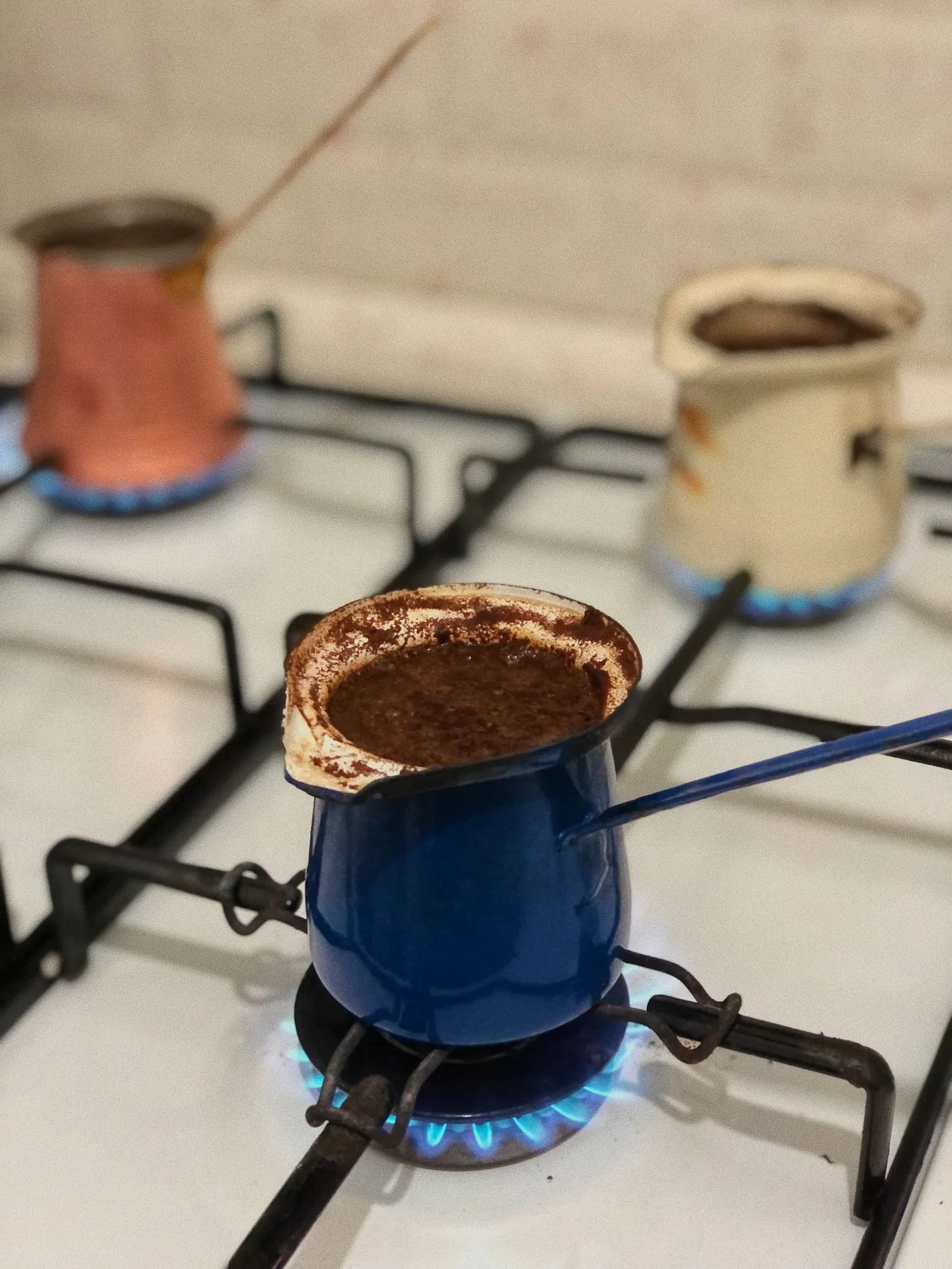
This is the traditional way, in a small long-handled pot (a cezve or rakweh). It takes about five minutes and makes the richest cup. The steps are the same as our Turkish coffee method, with the spice added.
Measure. For each cup, put about 7 g of powder-fine coffee (a heaping teaspoon) into the pot, then 60 to 70 ml of cold water.
Add the cardamom. One or two crushed pods, or about ⅛ teaspoon of ground cardamom, per cup, unless your coffee already has it ground in. Add sugar now too, if you take it.
Stir once. Stir until the powder is wet through, then leave it. Stirring on the heat breaks the foam.
Low heat. Set the pot on the lowest heat. In a few minutes a fine foam gathers at the edges and starts to climb.
Lift it off. When the foam rises toward the rim, lift the pot off the heat.
Pour and wait. Spoon the foam into each cup first, then pour the rest. Give it a minute so the grounds settle.
In a drip machine or French press, mix the ground cardamom into the coffee grounds before you add water. Do not stir ground cardamom into a finished cup: it will not dissolve and sits gritty at the bottom.
The Best Coffee for Cardamom Coffee
Cardamom is a bright spice, so it needs a coffee with enough depth underneath it. Very light roasts and cardamom both pull toward the citrus end, and the cup can taste thin. A dark roast gives the spice something to sit on.
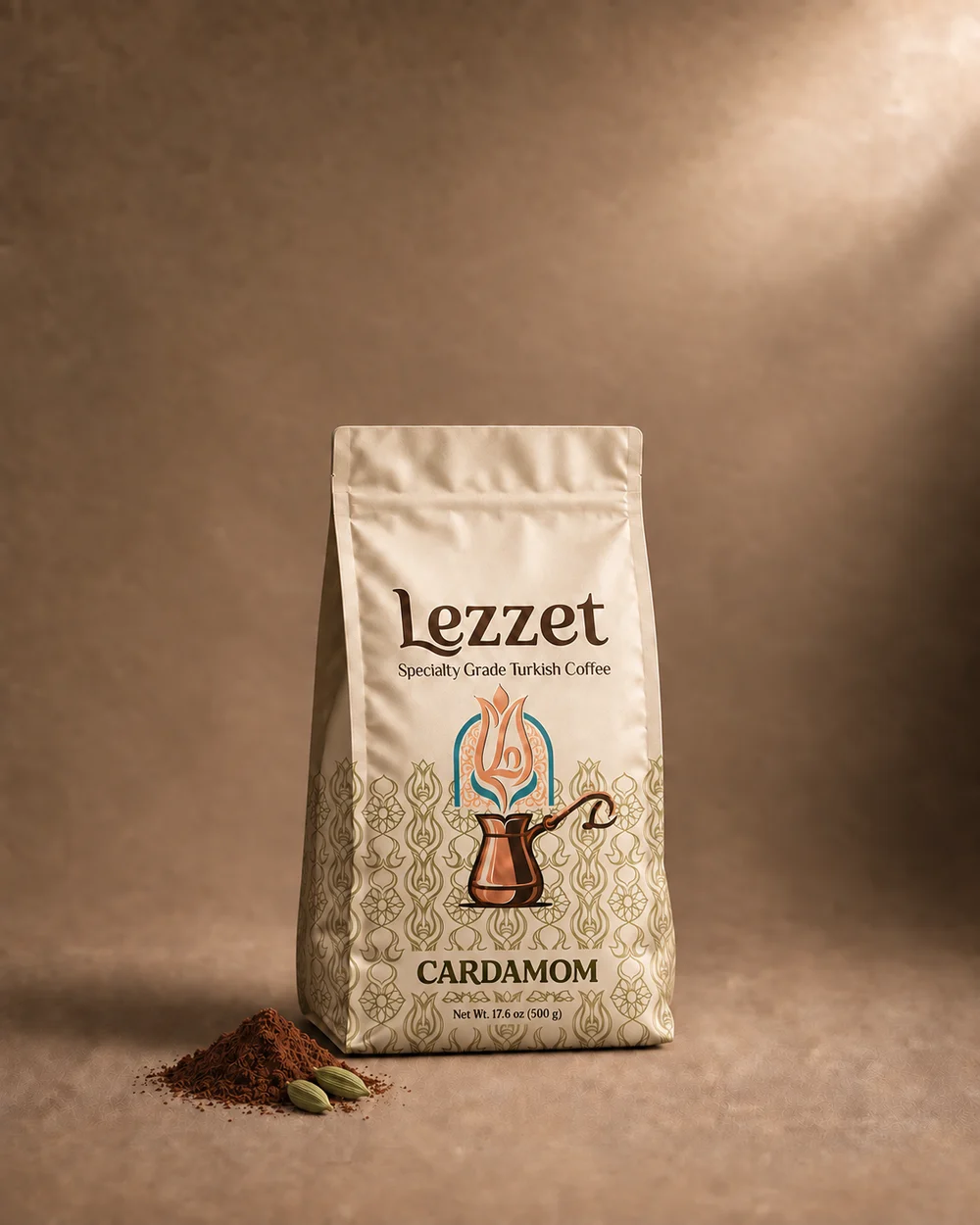
That is why Lezzet Cardamom starts with two specialty-grade arabicas, and a licensed Q Grader scored the coffee 84. The rich one grows at a lower elevation and is roasted dark for depth; the bright one grows higher and is roasted lighter to keep its lift. Each is roasted on its own, blended, and then the organic cardamom is ground in at 5%.
It comes ground powder-fine for the cezve, so there is nothing to crush or measure. If you would rather add your own spice, Lezzet Traditional is the same two-roast blend without it, and if you like a warmer spice, see our guide to cinnamon coffee. And if you do not own a pot yet, the Turkish Coffee Kit pairs a 12 oz stainless steel cezve with the coffee.
Cardamom Coffee FAQ
How do you make cardamom coffee?
Put the cardamom in the pot with the coffee. For one small cup, add 7 g of powder-fine coffee and one or two crushed pods (or ⅛ teaspoon of ground cardamom) to 60–70 ml of cold water, stir once, warm it on the lowest heat and lift it off when the foam rises. In a drip machine or French press, mix about 1 teaspoon of ground cardamom into 40 g of grounds.
Cardamom pods or ground cardamom: which is better?
Pods, if you have them. Crack the shell just enough to open it and the seeds give a cleaner, brighter taste. Pre-ground cardamom is quicker but loses its aroma within weeks of opening, so buy small jars, or use a coffee with the cardamom ground in fresh.
What is cardamom coffee?
Cardamom coffee is coffee brewed with cardamom, the small aromatic seed pod of a plant in the ginger family. It is the everyday cup across much of the Middle East, where the spice goes into the pot with the coffee, and it is also how many people take Turkish coffee.
What does cardamom coffee taste like?
Bright and a little citrusy, with a cool, resinous lift on the finish. In a dark roast the cardamom sits on top of the chocolate notes rather than covering them, so the cup tastes rounder and more aromatic than the same coffee on its own.
How much cardamom do you put in coffee?
About 5% of the coffee by weight is a good balance: enough to taste, not enough to take over. For one small cup made with 7 g of coffee that is about ⅛ teaspoon of ground cardamom, or one or two crushed pods. Gulf qahwa uses far more. Lezzet Cardamom is blended at 5%, so add nothing.
Can you add cardamom to regular drip coffee?
Yes. Mix a pinch of ground cardamom into the grounds before you brew, or drop a crushed pod into a French press. Ground cardamom stirred into a finished cup will not dissolve and sits gritty at the bottom, so brew it with the coffee instead.
When did people start adding cardamom to coffee?
No one recorded the first cup. Coffee drinking took hold in Yemen in the mid-1400s and spread across the Arab world over the next century, along the same trade routes that had carried cardamom from southern India for over a thousand years. By the time Arabic coffee was described in detail, cardamom was its defining spice.
Does cardamom coffee have caffeine?
Yes, the same as the coffee it is made with. Cardamom adds aroma, not caffeine. A small cup of Turkish-style cardamom coffee made with about 7 g of coffee has roughly the caffeine of a single espresso shot.
Is cardamom coffee Arabic or Turkish?
Both, and more. Cardamom is the one spice nearly every Arabic coffee recipe shares, from Gulf qahwa to the Lebanese cup, and many Turkish coffee drinkers add it too. The brewing method for the Levantine and Turkish cups is the same; the cardamom is the difference people notice.