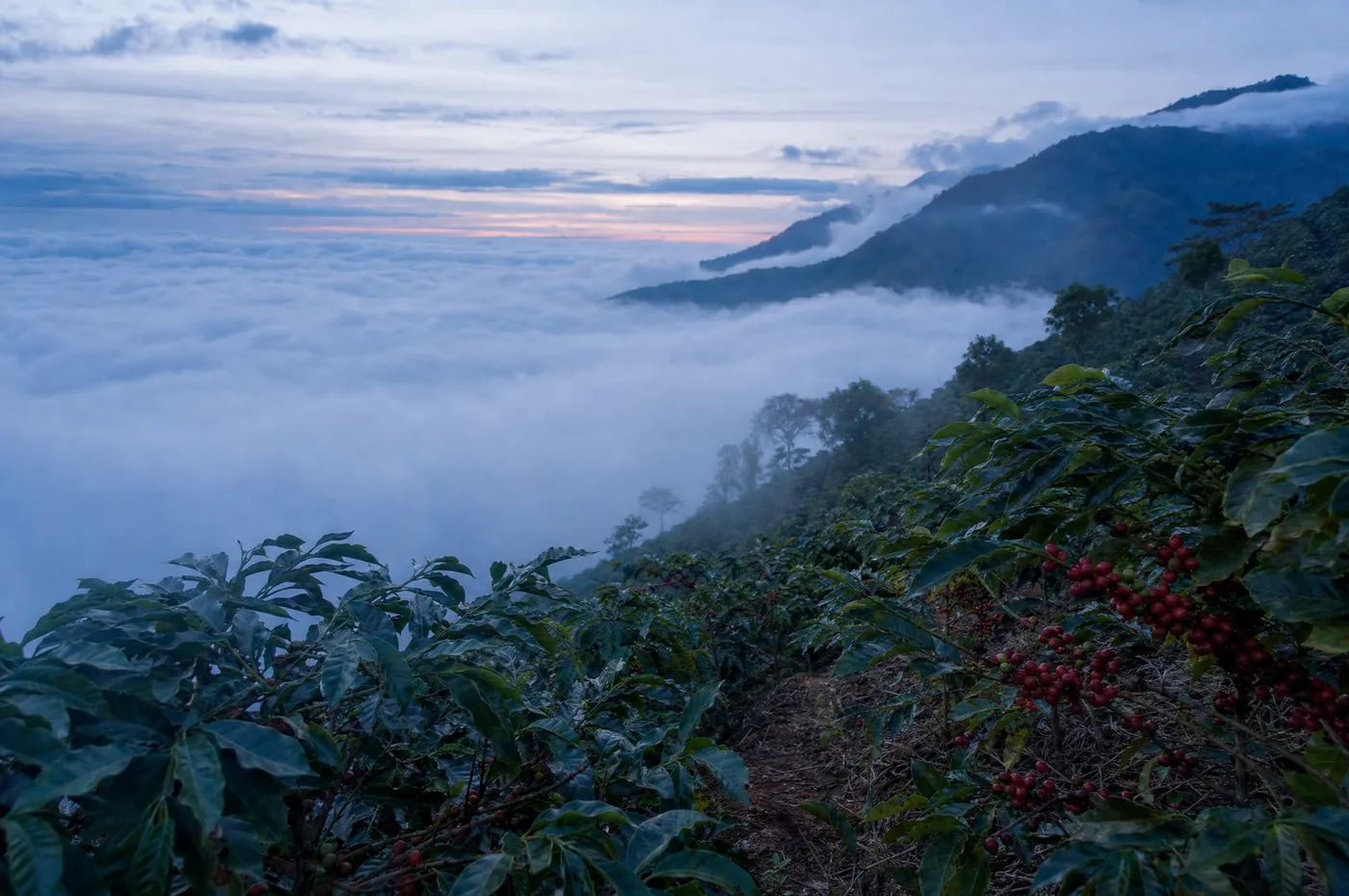
Altitude matters in coffee because cooler mountain air, and especially cold nights, slows the cherry down, and a cherry that ripens slowly makes a denser bean with more acidity and aroma.
That's the short version. The long version involves volcanoes, a grading system named after how hard a bean is, and roasters who adjust their flame for it. In Part 3 we went around the world. Now we go up.
What Does Altitude Do to a Coffee Cherry?
It gives the cherry more time. Air gets cooler as you climb, and on a tropical mountain the nights can get properly chilly. Cool temperatures slow the plant's metabolism, so the fruit takes longer to ripen.
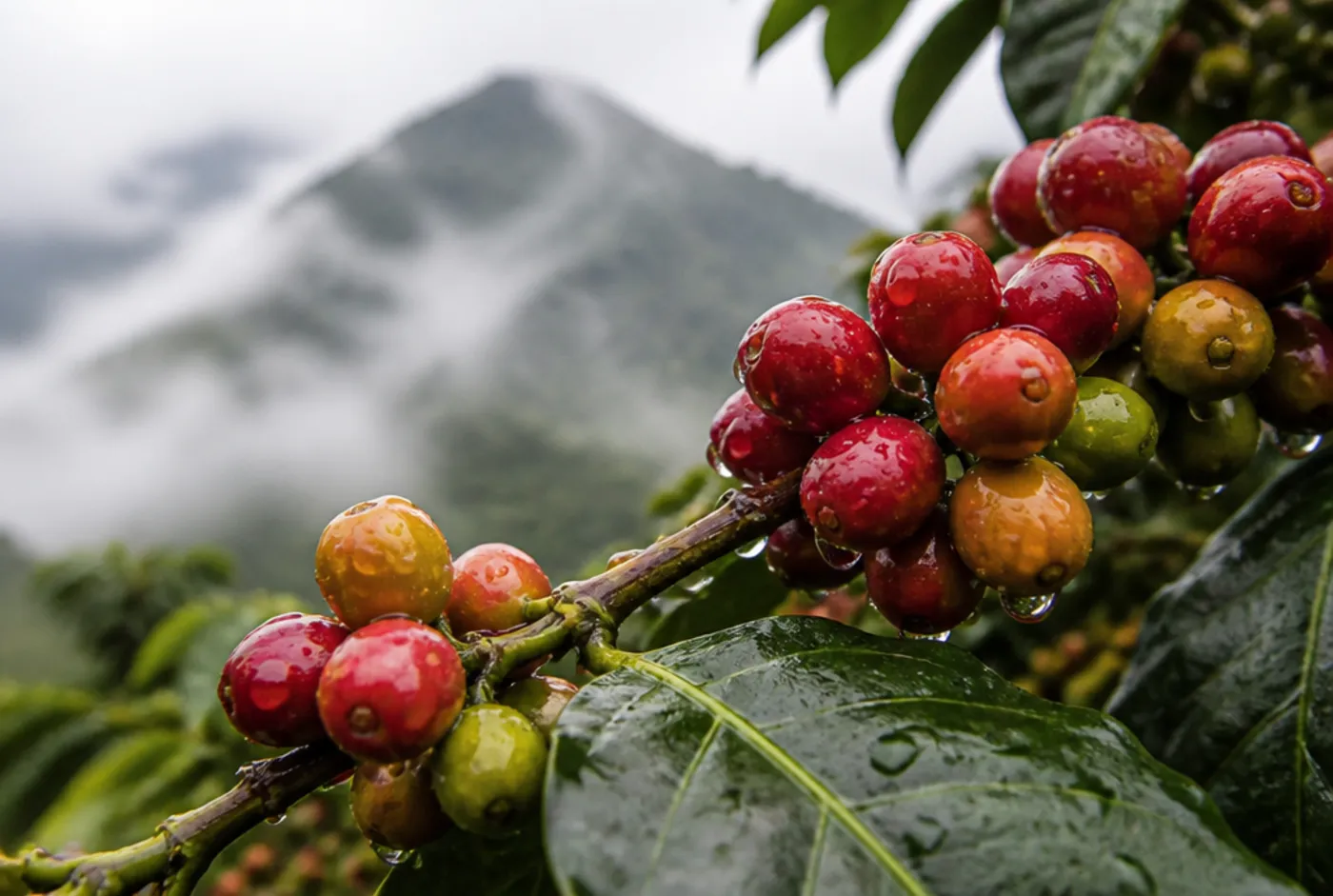
A slow cherry is a patient cherry. The seed inside has longer to fill out with sugars, acids and the compounds that turn into aroma in the roaster. Down in the warm lowlands, the same plant hurries. The fruit ripens fast, and the bean comes out softer and simpler.
Why Are High-Grown Beans Denser?
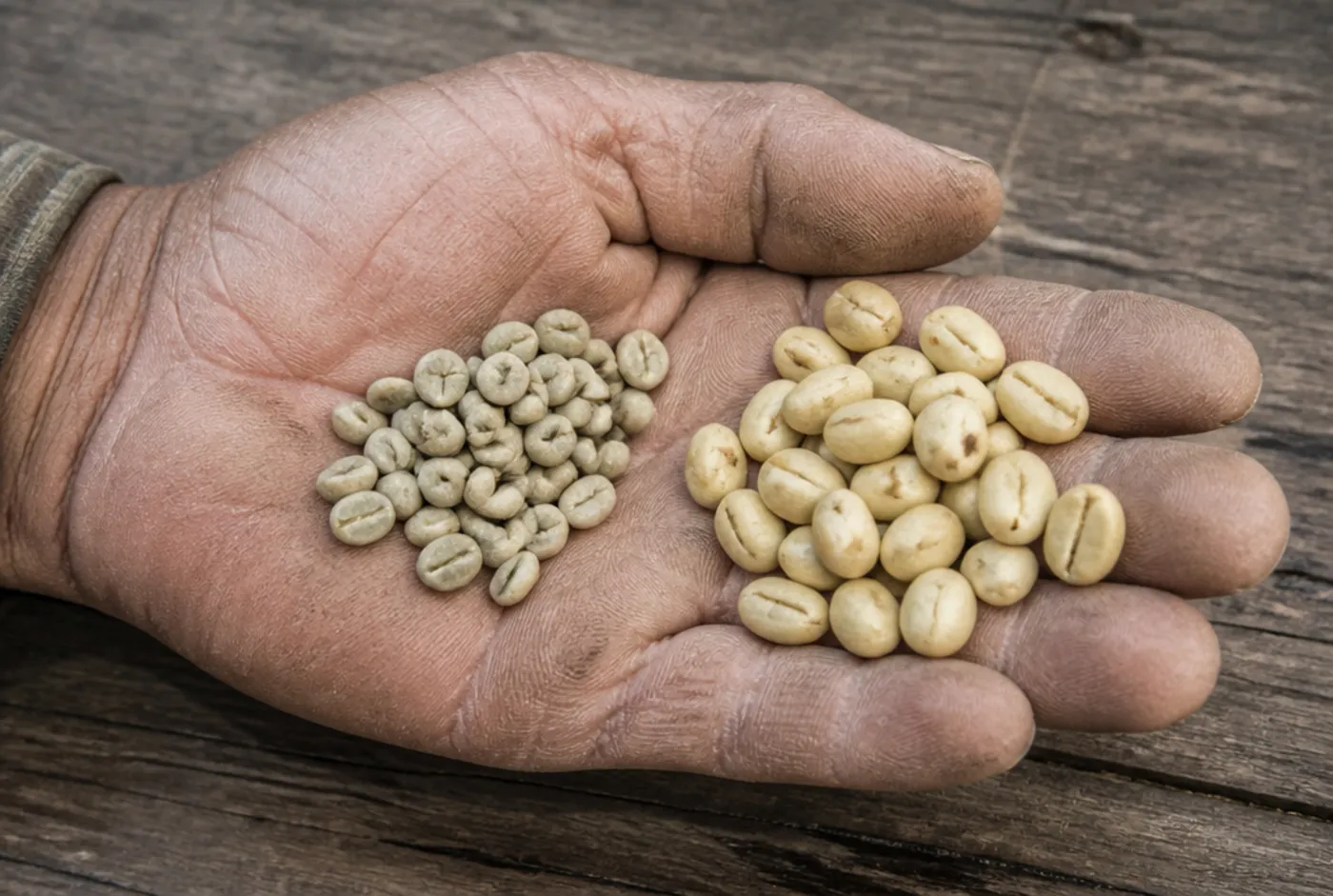
Because they grew slowly. A bean that takes its time builds a tighter, more compact cell structure. Hold an unroasted high-grown bean next to a lowland one and it is harder and heavier for its size.
That density is where the flavor lives. More sugar and acid packed into the seed means more to work with later: brighter acidity, more aroma, and the fruit and flower notes people chase in high-grown coffee. Lower-grown coffee goes the other way: rounder, softer, nuttier and heavier in the cup, which is exactly what you want at the base of a blend.
What Do SHB and SHG Mean?
They are altitude grades, and they are printed right on the sack. SHB means Strictly Hard Bean. SHG means Strictly High Grown. Same idea, different countries: Guatemala and Costa Rica say SHB, while Mexico and Honduras say SHG.
The cutoff changes from country to country, roughly 1,200 to 1,350 meters and up. Below that come grades like Hard Bean and High Grown. It is one of the few places in coffee where a farm's height is written into the name of the product.
How High Is "High"?
It depends on how far you are from the equator. The farther away a farm sits, the cooler the air at any given height, so coffee can find its cool nights lower down the mountain.
Species matters too. As we saw in Part 2, arabica likes it high and cool, while robusta takes the heat lower down.
Does Altitude Change How Coffee Is Roasted?
Yes, and this is the part I find most fun. A dense, high-grown bean takes heat slowly. Roasters often start it hotter, so the heat can push into the tight core.
A softer, lower-grown bean holds more air and reacts faster. Hit it too hard at the start and the outside races ahead of the inside, so it usually gets a gentler start. Same machine, two different conversations.
It is also why roasters love to roast high-grown coffee lighter: a lighter roast keeps the brightness the mountain worked so hard to build. Darker roasts lean into body and depth, which suits beans that bring weight to begin with. More on that in our light vs dark roast guide.
So Which Altitude Makes the Better Cup?
Neither, which keeps things interesting. Altitude decides where a coffee lands between bright and rich. You can pick one end, or have both.
We picked both. Lezzet Traditional is two origins, two roasts: a rich one roasted dark, and a bright one roasted lighter to keep its fruit. Each is roasted on its own, fresh in the USA in small batches, then blended and ground powder-fine. That lift has a name, by the way, and it is the subject of Part 5: acidity.
Coffee Altitude: FAQ
Why does altitude matter in coffee?
Higher farms are cooler, especially at night, so the coffee cherry ripens more slowly. The bean grows denser and builds more of the sugars and acids that give a cup its brightness and aroma.
What altitude is best for coffee?
There is no single best height. Arabica generally does well in cool highlands, and how high is "high" depends on how far the farm is from the equator. Lower-grown coffee tends to taste rounder and heavier, which many blends want.
What do SHB and SHG mean on coffee?
Strictly Hard Bean and Strictly High Grown. Both are altitude grades used in Central America and Mexico for coffee grown high up, roughly above 1,200 to 1,350 meters depending on the country.
Is high altitude coffee better?
It is different, not automatically better. High-grown coffee tends to be brighter and more aromatic; lower-grown coffee tends to be softer, nuttier and heavier. Both have a place in a good cup.
Does altitude change how coffee is roasted?
Yes. Dense, high-grown beans can take more heat early in the roast. Softer, lower-grown beans react faster and usually get a gentler start.