
The world's coffee growing regions all sit in one belt around the middle of the planet, between the Tropic of Cancer and the Tropic of Capricorn: Africa and Arabia, Central America and Mexico, South America, and Asia and the Pacific.
Same plant, five neighborhoods, very different cups. In Part 1 we found where coffee started. Here is where it went, and what each place does to it.
Why Does Coffee Only Grow in One Belt?
Because the plant cannot take frost. One hard freeze can kill a tree. The tropics never freeze at farming heights, and they give coffee what it wants: warm days, steady rain and a dry season to ripen the fruit.
Inside the belt, height does the fine-tuning. Arabica likes it high and cool. Robusta takes the heat lower down. More on that in Part 2.
What Does Africa Do to Coffee?
Africa is where arabica began, and its high plateaus still grow some of the brightest coffee in the world. Cool nights slow the cherry down. A slow cherry has time to build sugar and acidity, so the cup tends toward flowers, citrus and berries.
Ethiopia is the continent's largest producer and the home of wild arabica. Kenya, Rwanda and Burundi are known for vivid, juicy cups too. If you want the deep version, read our guide to Ethiopian coffee.
Why Does Arabia Matter So Much?
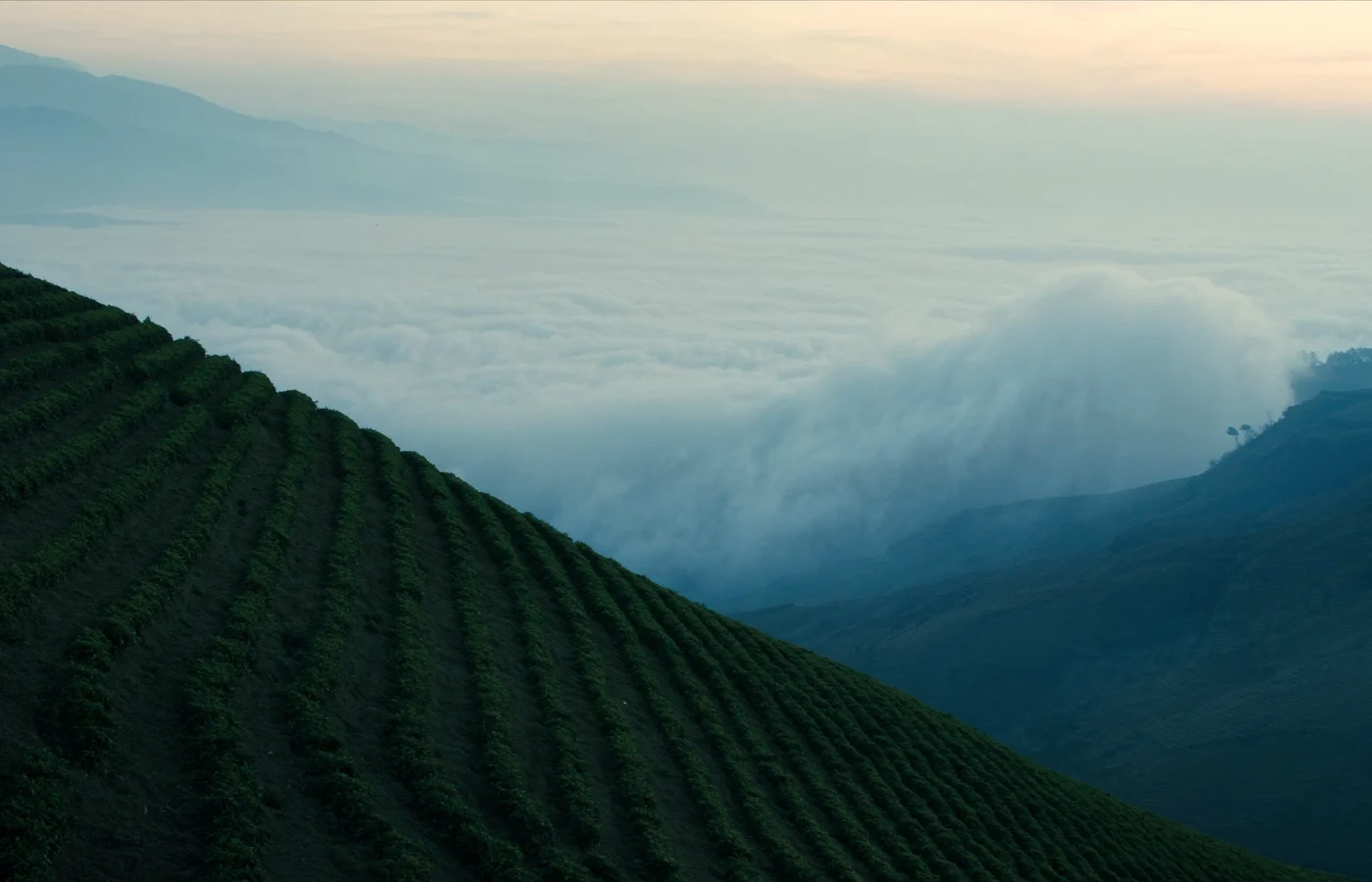
Because Yemen is where coffee became a drink, and a business. For about three centuries, much of the world's coffee left through one Red Sea port: Mocha. Yemen still grows coffee on terraced mountainsides, in small amounts, and it tends to taste wild and fruity, with a winey edge. Across the Arabian Peninsula, coffee is still poured for guests as Arabic coffee (qahwa), light-roasted and spiced with cardamom.
What Does Central America Do to Coffee?
Think volcanoes. Guatemala, Costa Rica, Honduras, Panama and southern Mexico grow coffee on volcanic slopes between two oceans, with mineral-rich soil and a clear dry season.
The result is the balanced middle of coffee: cocoa, caramel sweetness and a clean, polite acidity. These coffees can lead a blend or anchor it.
What Does South America Do to Coffee?
South America is the heavyweight. Brazil alone grows more than a third of the world's coffee, much of it on broad, lower plateaus where the fruit is often dried right on the bean. That gives the classic soft, nutty, chocolatey cup that so many blends are built on. Our guide to Brazilian coffee goes deeper.
Colombia grows higher, in the Andes, and its coffee sits in a clean middle: sweet, round and gently bright.
What Do Asia and the Pacific Do to Coffee?
This is the weight side of the map. Indonesia, India and Papua New Guinea grow on volcanic islands and monsoon coasts, and some of their methods strip acidity and add body. The cups run earthy, spicy and heavy, often the base under something brighter.
Asia also grows a lot of robusta. Vietnam is the world's second-largest coffee producer, mostly robusta.
How Did Coffee Get to All These Places?
Mostly by people carrying seeds where they were not supposed to. The Dutch grew coffee in Java, and by 1719 "Java" coffee was supplying Europe, which is why "java" still means coffee. A French naval officer took seedlings to Martinique in 1720. And a pilgrim named Baba Budan is said to have carried seeds out of Yemen to the hills of southern India in the 1600s.
Which Coffee Region Is Best?
None of them, which is the fun part. Africa and Arabia bring aroma and brightness. Asia and the Pacific bring weight. The Americas sit in between and can do either. That is why blenders put a base from one side next to an accent from the other. Our coffee origins guide maps every region on one wheel, with which ones blend well.
We do the same thing. Lezzet Traditional is two origins, two roasts: a rich one roasted dark and a bright one roasted lighter, each roasted on its own, fresh in the USA in small batches, then blended and ground powder-fine.
Coffee Growing Regions: FAQ
What are the main coffee growing regions?
Coffee grows in the tropics, in a band around the world called the coffee belt. The main regions are Africa, Arabia, Central America and Mexico, South America, and Asia and the Pacific.
What is the coffee belt?
The band of the world between the Tropic of Cancer and the Tropic of Capricorn, where the climate stays frost-free and warm enough for the coffee plant. Nearly all coffee grows inside it.
Which country grows the most coffee?
Brazil, by a wide margin: around 65 million 60 kg bags in 2025/26 according to the USDA, more than a third of the world total. Vietnam is second, and grows mostly robusta.
Does where coffee grows change how it tastes?
Yes. Height, temperature, rain, soil and the way the fruit is processed all shape the cup. In general, high, cool places give brighter, more aromatic coffee, and lower, warmer ones give rounder, heavier coffee.
Where did the name mocha come from?
From Mocha, a port on the Red Sea coast of Yemen that was the main marketplace for coffee from the 1500s and peaked in the early 1700s.