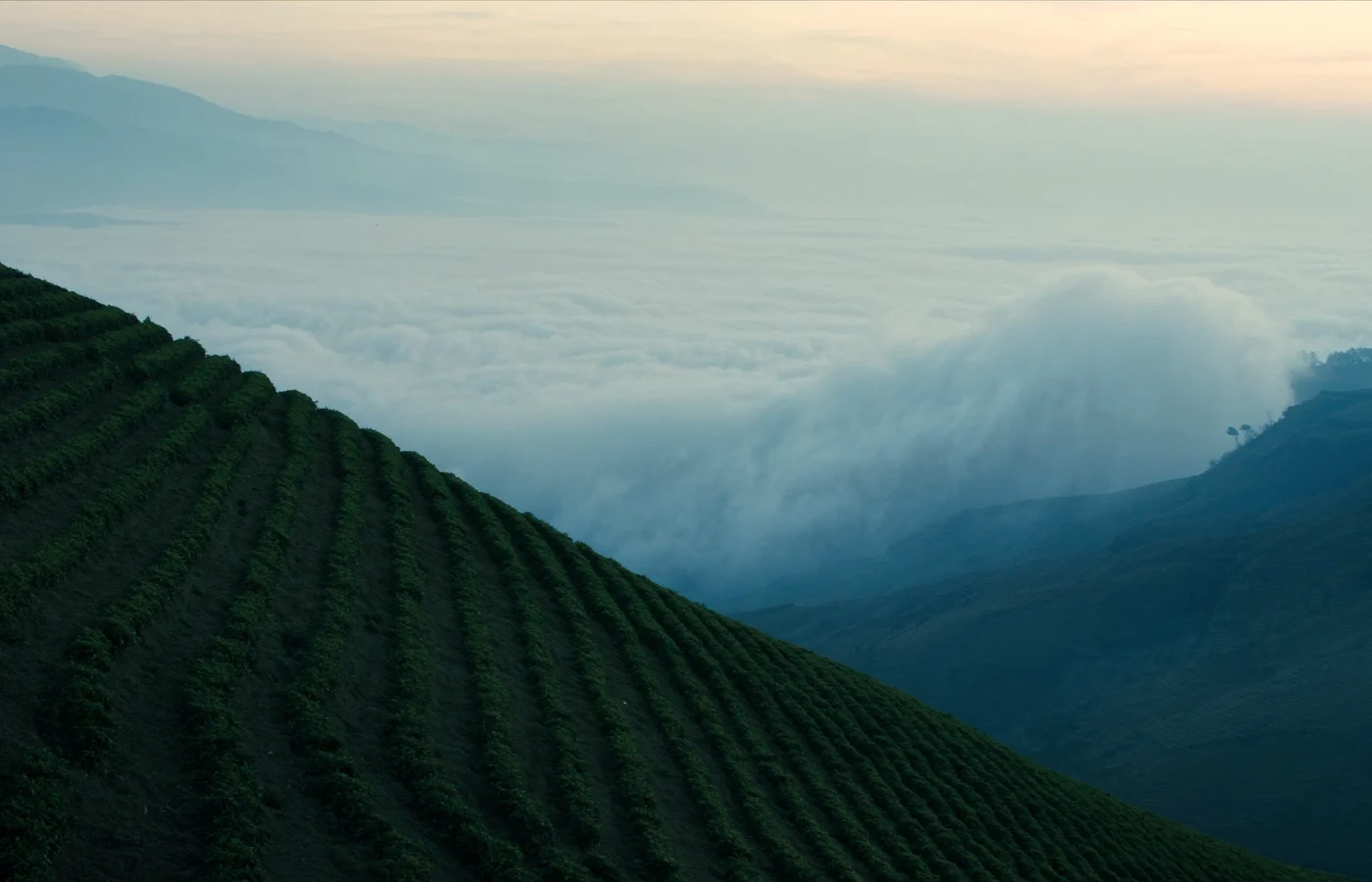
Ethiopian coffee is coffee grown in the country where arabica began: the wild coffee trees of southwestern Ethiopia are the ancestors of most of the arabica in the world, and the country's high-grown coffees are known for bright acidity and floral, fruity aromas. Ethiopia is also Africa's largest coffee producer, and it drinks about half of what it grows.
This guide covers where coffee began, the legend that comes with it, the heirloom varieties and famous regions, how processing changes the cup, the Ethiopian coffee ceremony, and what a bright, lighter-roasted coffee tastes like in a Turkish cup.
Is Ethiopia the Birthplace of Coffee?
Yes. Coffea arabica is native to the highland forests of southwestern Ethiopia, and it still grows wild there, in the shade of the montane forest, between roughly 1,000 and 2,000 meters. The Kafa region holds the largest share of those forests, and in 2010 the wild coffee forests of Kafa were named a protected biosphere reserve, in part because they are the center of origin and genetic diversity of wild arabica. Kafa holds close to 5,000 wild varieties of the plant.
Arabica itself is a natural hybrid. Botanists trace it to a cross between two other coffee species, Coffea canephora (robusta) and Coffea eugenioides, which happened in the region hundreds of thousands of years ago. Our guide to arabica vs robusta follows that family tree further.
What Is the Legend of Kaldi?
Every origin story needs a hero, and coffee's is a goatherd. As the legend goes, a herder named Kaldi noticed that his goats became restless and lively after eating the red cherries of a certain shrub. He tried them himself, and the rest is the morning routine of half the world.
Treat it as a legend. The story is usually set in the ninth century, but it did not appear in writing until 1671, more than eight hundred years later. What is not legend is the plant: wild arabica grew in these forests long before anyone told stories about it.

What Are Ethiopian Heirloom Varieties?
Most coffee-growing countries plant a handful of named cultivars. Ethiopia is different. Much of its coffee comes from the many local and wild arabica types that grow across the highlands, often mixed together on the same farm, so bags are commonly labeled simply "heirloom." The word is less a variety name than a description: local arabica, with the genetic range of the place coffee started.
Ethiopian coffee is grown three ways. Forest coffee is gathered from wild trees. Garden coffee grows around homesteads, often in small plots. Plantation coffee is farmed more intensively. Much of the country's coffee still comes from small growers rather than large estates.
Where Is Ethiopian Coffee Grown?
The names you see on specialty bags mostly come from the south.
Sidamo (Sidama). The broad southern region, with coffee grown at roughly 1,500 to 2,200 meters. Sidamo coffees are known for balance, bright acidity and a floral, citrus lift.
Yirgacheffe. A small area that is part of the wider Sidama growing region, and probably the most famous name in Ethiopian coffee. Washed Yirgacheffe is known for delicate floral and citrus notes.
Guji. South and east of Sidama, and a newer name on specialty menus. Guji coffees are known for complex, aromatic cups, often with stone fruit.
Other regions, among them Harar in the east and Jimma and Limu in the west, have their own styles. Harar, for example, is mostly processed natural.
Why Is Ethiopian Coffee So Bright?
Altitude. Arabica grows best in the tropics where it never freezes, and the higher it grows, the cooler the nights. Cool nights slow the ripening of the coffee cherry, and slow ripening builds more sugar and acidity into the seed. That acidity is what tasters call brightness: the lively, juicy quality that makes a coffee taste of fruit rather than only of roast. Our coffee origins guide maps how altitude shapes coffee from every growing region.
Washed or Natural: What Is the Difference?
After picking, the coffee seed has to come out of the fruit and dry. How that happens changes the cup as much as the farm does.
Washed coffee has the fruit removed before drying. The beans are pulped, fermented briefly, washed and then dried. The result is a clean, bright cup that shows acidity and florals clearly. Many of the best-known Yirgacheffe coffees are washed.
Natural coffee is dried whole, inside the cherry, before the dried fruit is hulled away. The seed spends weeks in contact with the fruit, and the cup comes out sweeter, fruitier and heavier, often with notes of berries. Ethiopia's naturals helped make the style famous.
Neither is better. Washed reads cleaner, natural reads riper, and the same farm can produce both.
What Is the Ethiopian Coffee Ceremony?
In Ethiopia coffee is hospitality, and the ceremony is how it is offered. It can take an hour or more, and nobody rushes it.
The host starts with unroasted beans, washes them, and roasts them in a flat pan over an open flame, carrying the smoking pan around so guests can enjoy the aroma. The beans are ground by hand in a wooden mortar called a mukecha and brewed in a jebena, a clay pot with a round base, a narrow neck and spout, and a handle. Incense often burns nearby, and the coffee comes with snacks such as popcorn or peanuts.
The same grounds are brewed three times, and each round has a name. In Amharic the first is abol, the strongest; the second is tona; the third is baraka, meaning blessing. Most people take their coffee with sugar, and in some rural areas with salt or spiced butter instead.

How Does a Bright Coffee Taste in a Turkish Cup?
Turkish coffee has no filter. The coffee is ground powder-fine, brewed in a small pot and poured with its grounds, so everything in the bean reaches the cup. That makes the method a revealing way to taste a bright, high-grown coffee.
Roasted lighter, a coffee like this keeps its aroma. In the cup it smells of flowers or fruit before you sip, the acidity reads as lively rather than heavy, and the finish is clean. Roasted much darker, those floral and fruit notes give way to the flavors of the roast itself, which is why roasters who want to keep a coffee's brightness stop sooner.
On its own, a bright coffee can make a lighter-bodied Turkish cup with a thinner foam. That is why many blends pair it with a second coffee: a rich, lower-acidity one, roasted darker, that brings body, dark chocolate and a sturdy foam. Our guide to light vs dark roast explains why the two are often roasted separately.
What Coffee Should You Try for Turkish Coffee?
Ours. Lezzet Traditional pairs Ethiopia, roasted lighter for its touch of fruit, with Brazil, roasted dark for chocolate and the foam. Each is roasted on its own, then blended and ground powder-fine.
For the wider family of origins and how they combine, open the coffee origins guide, or read how Brazilian coffee became the classic base for blends.
Ethiopian Coffee FAQ
Is Ethiopia really the birthplace of coffee?
Yes. Coffea arabica, the species behind most specialty coffee, is native to the highland forests of southwestern Ethiopia, where it still grows wild. The wild coffee forests of Kafa were named a protected biosphere reserve in 2010 for that reason.
Who was Kaldi?
Kaldi is the goatherd of a legend: he noticed his goats grew lively after eating the red cherries of a shrub, and coffee was discovered. It is a story, not a record. It did not appear in writing until 1671, centuries after the events it describes.
What does Ethiopian coffee taste like?
Bright and aromatic. Washed Ethiopian coffees tend toward floral and citrus notes with a clean finish; naturals, dried inside the cherry, tend toward berry and stone fruit with more sweetness and body.
What does "heirloom" mean on an Ethiopian coffee?
It means the coffee comes from the many local arabica varieties that grow in Ethiopia rather than from one named cultivar. The country holds a huge store of arabica genetic diversity, with thousands of wild and local types.
What is the difference between Yirgacheffe, Sidamo and Guji?
They are growing areas in southern Ethiopia. Sidamo (Sidama) is the broad region; Yirgacheffe and Guji are well-known areas within or beside it. All three grow coffee high, roughly 1,500 to 2,200 meters, and are prized for bright, aromatic cups.
Can you use Ethiopian coffee for Turkish coffee?
Yes, if it is ground powder-fine. A bright, lighter-roasted coffee gives a lively, aromatic Turkish cup. Many people prefer it blended with a richer, darker-roasted coffee that adds body and carries the foam.